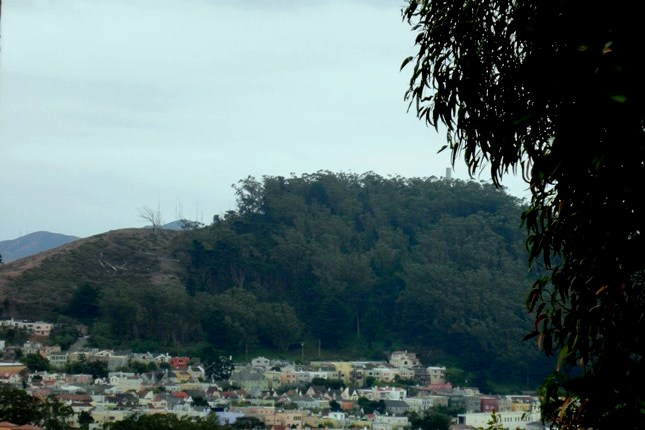
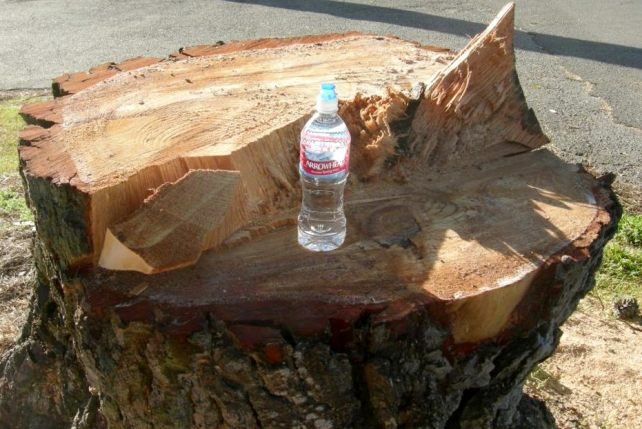
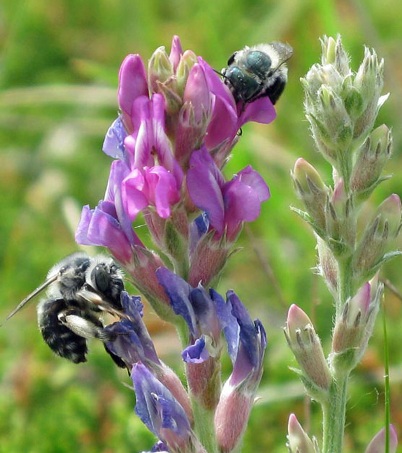
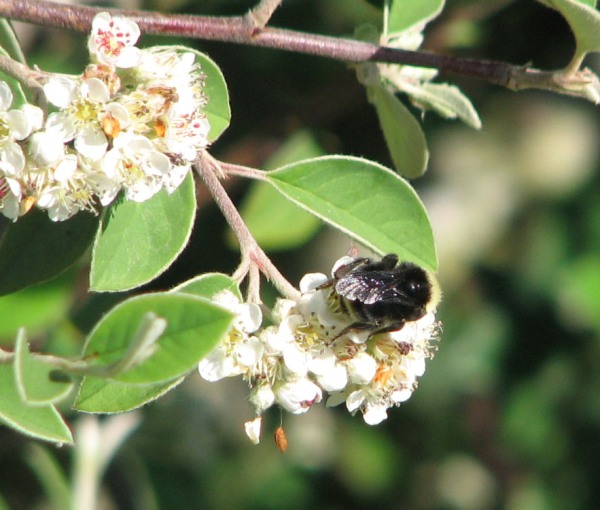
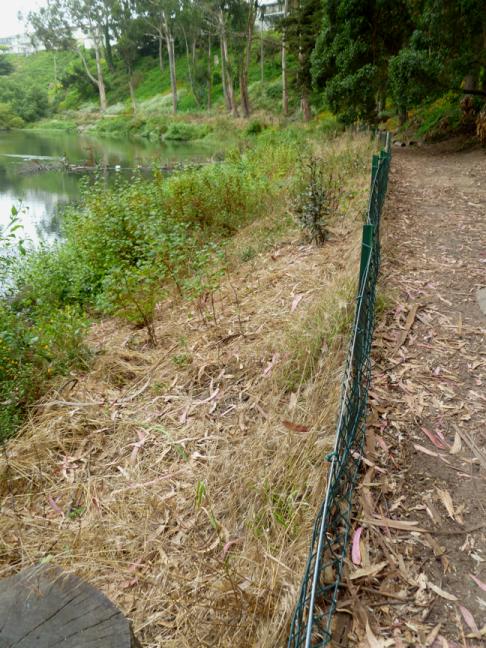
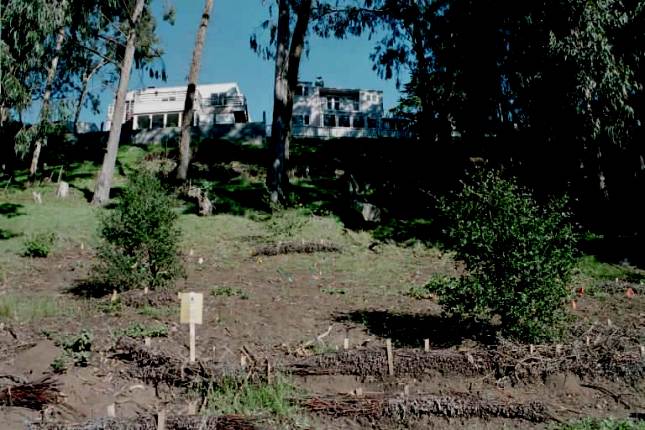
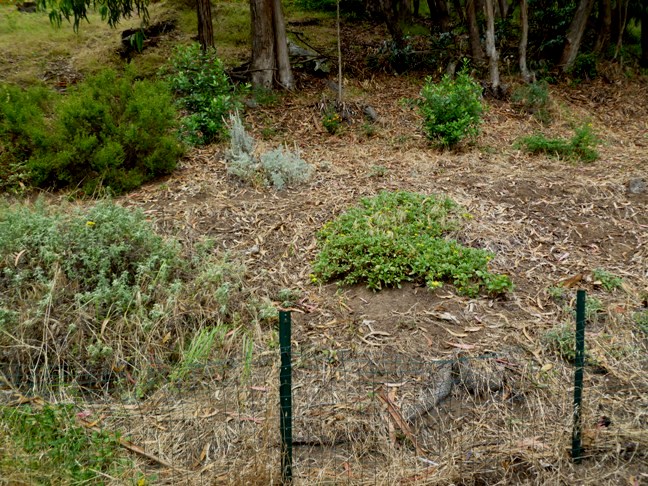
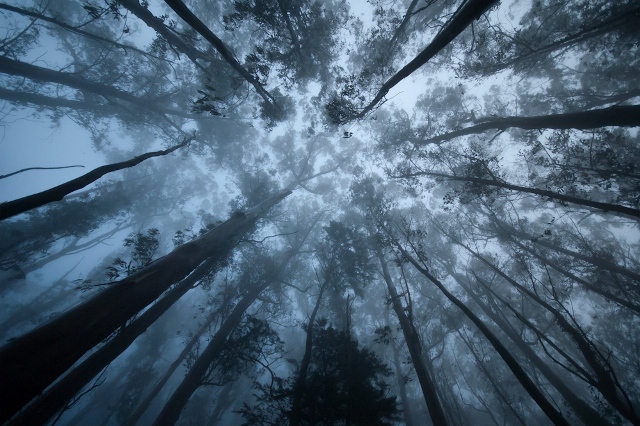
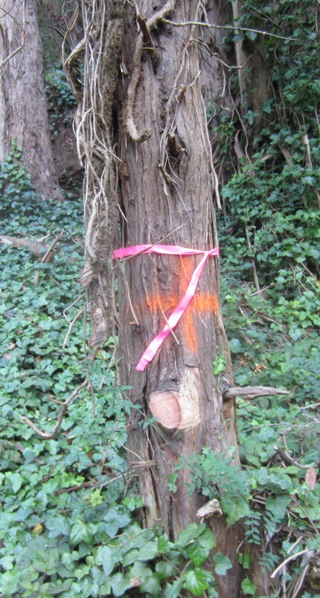
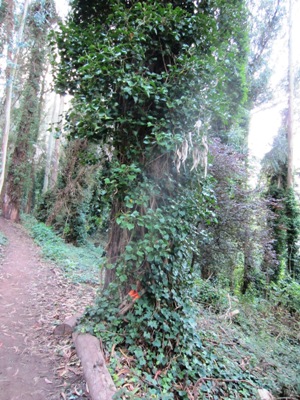
Mt. Davidson Park – An Open Space Preserved for Recreation or Native Plants?

It’s not just Sutro Forest.

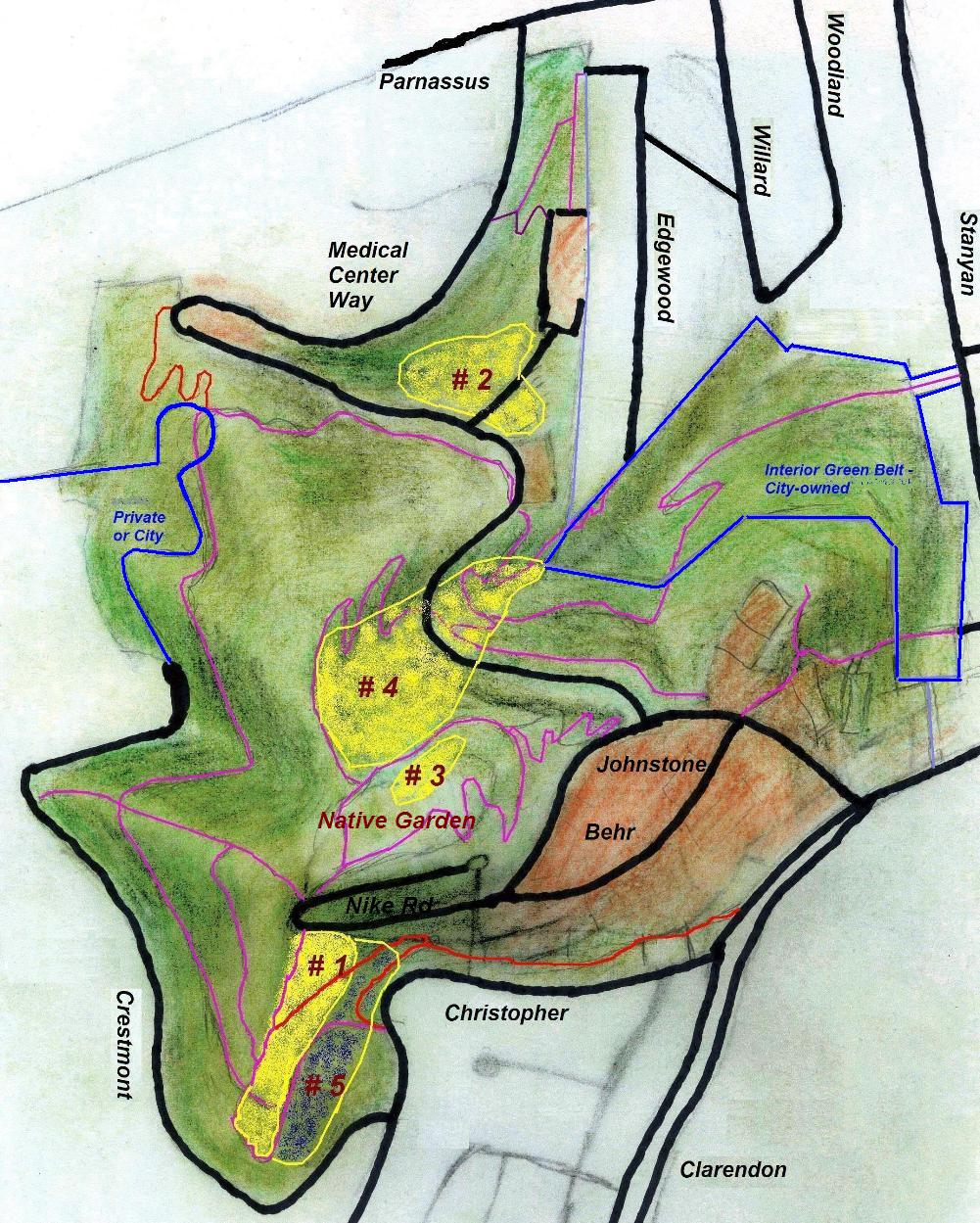
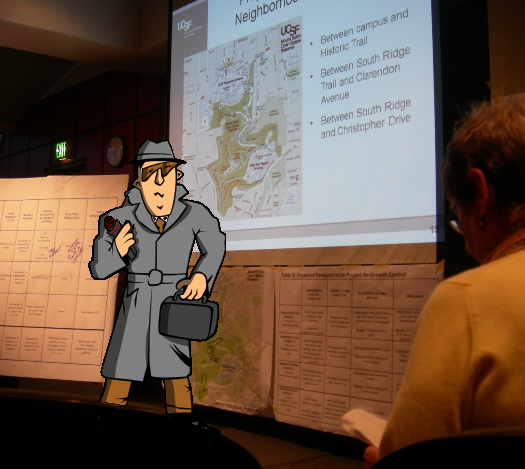
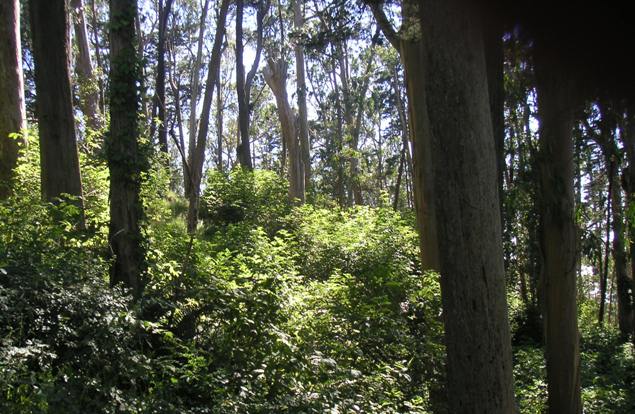
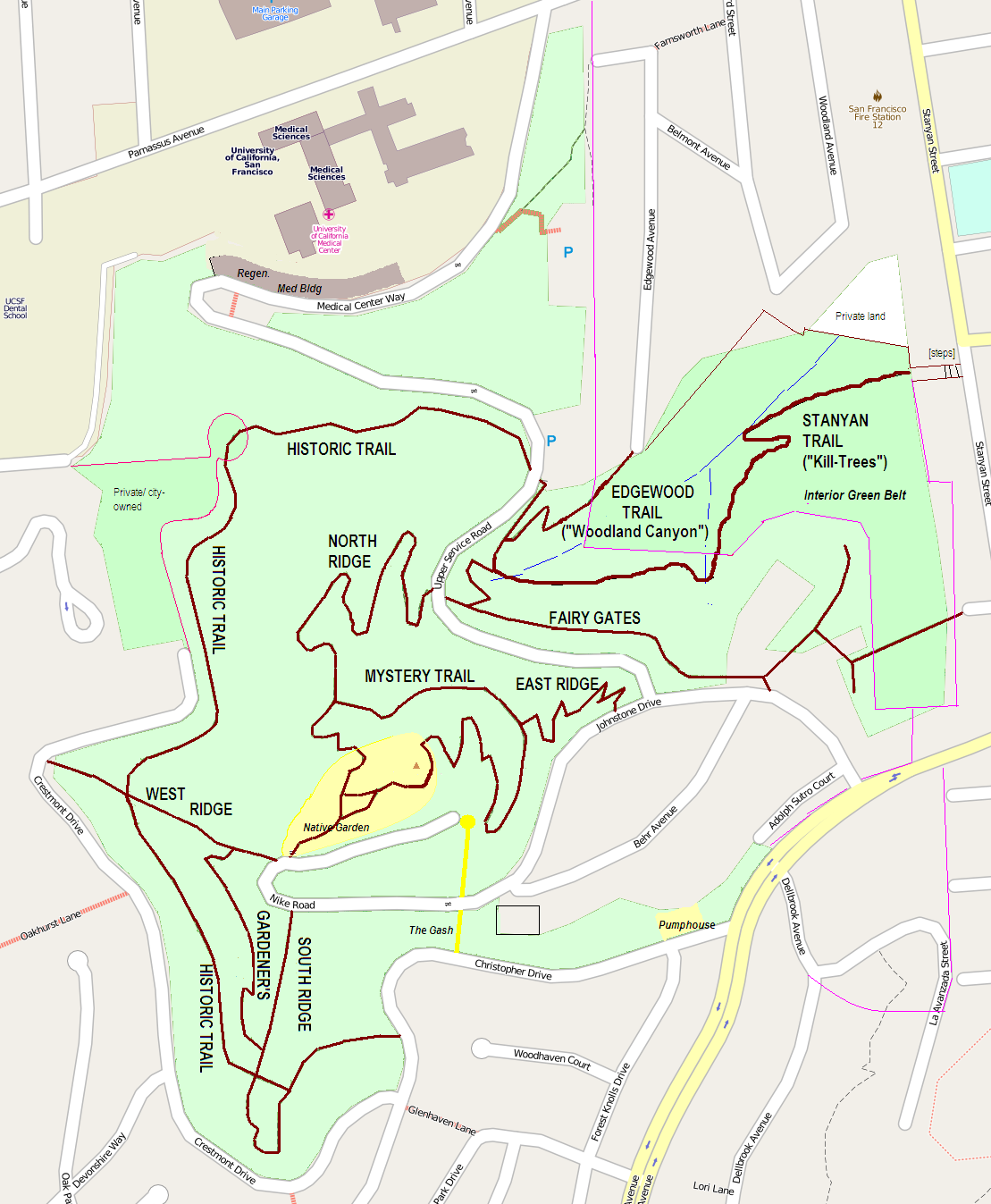
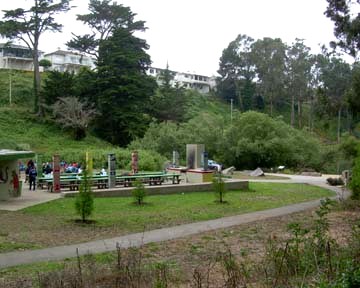
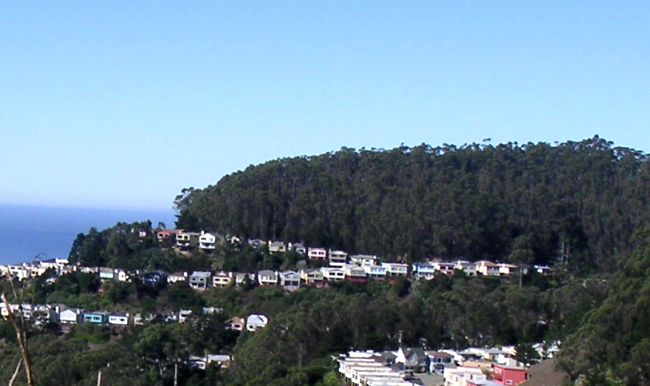
Native plant interests threaten trees throughout the city, and in particular, in San Francisco’s other significant century-old forest: Mt Davidson. A favorite area for the residents of Miraloma Park, the Significant Natural Areas Management Plan calls for felling over 1600 trees. In the map below, the brown areas would be… well, brown. At least in summer. They are to be turned over to native plants.

The article below by Jacqueline Proctor was published in Miraloma Life in November 2011, and is republished here with permission and added emphasis.

————————————————————————————-

Mt. Davidson Park – An Open Space Preserved for Recreation or Native Plants?
By Jacqueline Proctor

In 1995, the City transferred Mt. Davidson Park to the Natural Areas Program with the result that protection and restoration of native plants—rather than public recreation, aesthetics, or forest maintenance—has become the first priority of the few City staff assigned to maintain the park. A recently completed Draft EIR has determined that the Natural Areas Program Plan will have a significant impact on the environment. Indeed, the Plan envisions the negative consequences to public enjoyment of the Park to be beneficial.

While the City is busy planting 1000s of street and median trees to “clean the air,” it is giving the OK to spend limited Recreation and Park funds to cut down 1000s of the historic trees along the trail and road areas of Mt. Davidson, restrict public access through native plants areas by installing barriers, prohibiting benches in the best view areas, and fostering the growth of poison oak (a native plant now thriving where non-native shrubs and trees have already been removed).

The Miraloma Park Improvement Club Board plans a letter to the City advocating for the Final EIR to recommend preservation of the forest as an historic, natural, recreational, and aesthetic resource, as well as advocating for full access to the native plant area and installation of benches in the view areas.

————————————————————————————-

(The Board did write such a letter in comments to the Draft Environmental Impact Report on the SNRAMP.)

Recently, the Wall Street Journal covered this in its December 15th 2011 issue; and the San Francisco Examiner  had an article about it on the same day. The San Francisco Forest Alliance (SFFA) has links to both articles on its Facebook page. Click here for WSJ, and here for the article in the Examiner.

Posted in deforestation, eucalyptus, nativism, Natural areas Program | Tagged , , , , , , , | Comments Off on Mt. Davidson Park – An Open Space Preserved for Recreation or Native Plants?

‘Tis the Season… for Poisons on Twin Peaks

And when is it not, actually?

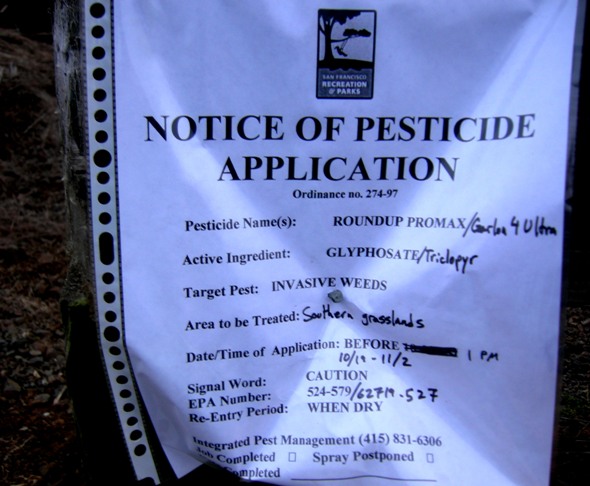
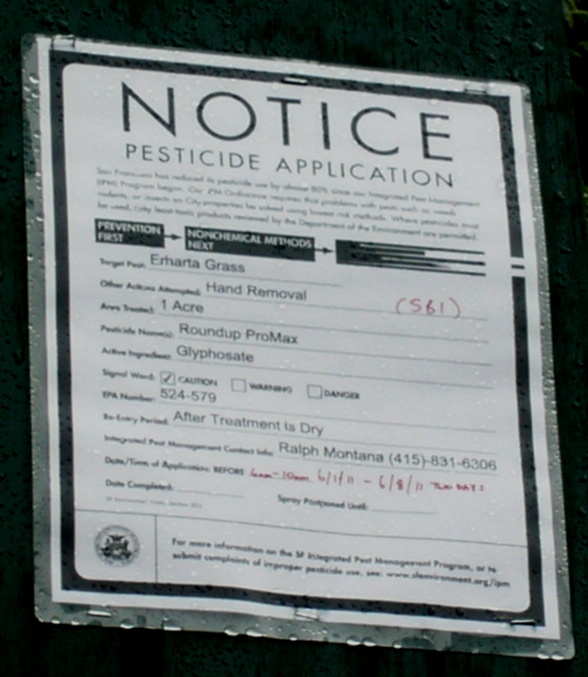
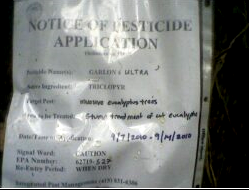
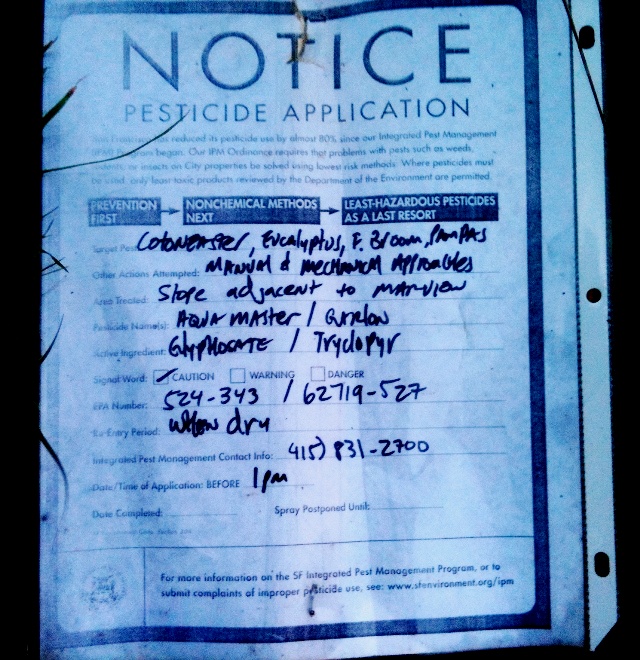
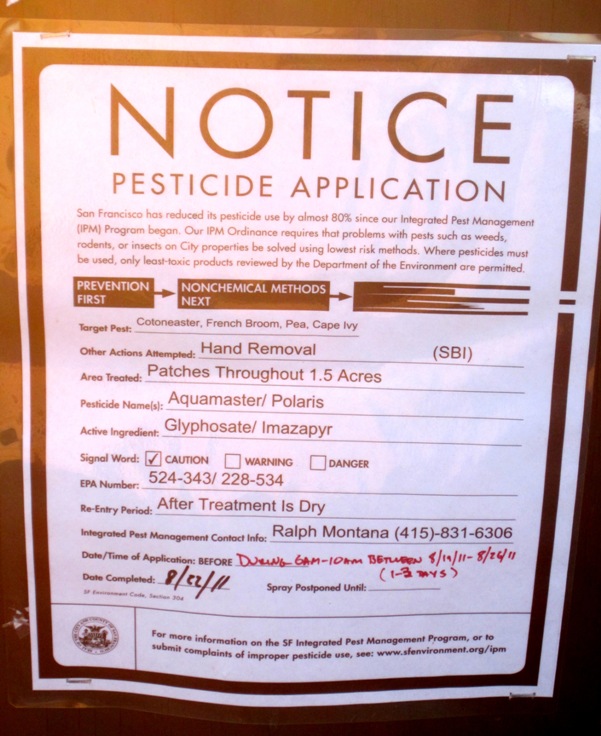
Maybe this could be called the Santa Claus mix? The old formula – Glyphosate and Imazapyr, being used against “Road brush” whatever that is, and erhata grass. It’s scheduled for Dec 19-23, 2011.

Pesticides infest the “natural” areas of the SF Rec & Park… the “Significant Natural Resource Areas.”

(Incidentally, the phone number on the notice seems to be wrong. If you want to call Mr Montana, this may work better: Ralph Montana of IPM (415) 831-6314. [ETA: Correction: The number works; 831-6306 will take you to Ralph Montana.]

It’s beginning to look a lot like Christmas, everywhere you go. Except Twin Peaks.

Posted in Environment, Herbicides, Herbicides: Roundup, Garlon, nativism, Natural areas Program | Tagged , , | 1 Comment

The San Francisco Forest Alliance

We’ve been critical of the so-called “Natural” areas program (or officially, the Significant Natural Resource Areas Plan) that covers some 1100 acres across 32 separate parks in San Francisco.  While the idea of a Natural Area is appealing (as it was to us, when we first heard it) the actuality has been:

  • Dead and felled trees and habitat destruction;
  • Use of some of the most toxic pesticides the city permits;
  • And reduction of areas actually open to recreation.

All of this, of course, at some considerable expense to the taxpayer.

Others have been critical, too.

The newly-formed San Francisco Forest Alliance is intended to battle these expensive and destructive activities. Its members are “concerned residents from groups throughout the city, such as Save Mt. Sutro Forest, Save Glen Canyon, Miraloma Park Improvement Club, Golden Gate Heights Neighborhood Association, West of Twin Peaks Council, Greater West Portal Neighborhood Association, and others.”


The SFFA website is here.

The material below is from its Facebook page.

————————————————————-

SAN FRANCISCO FOREST ALLIANCE

Our mission:

  • Halt destruction of city park trees and wildlife habitat
  • Reverse plans that deny public access to trails and natural areas
  • Eliminate unwarranted toxic hazards to children and wildlife
  • Stop abuse of tax revenue and funding within city natural areas

Spectacular forests with towering trees and thickets are awe-inspiring for people and serve as critical habitat for wildlife in pockets of San Francisco. While city plans call for many good improvements and safeguards to preserve and protect these wild areas, there is a destructive element in motion.

The Natural Areas Program (NAP), a group within Rec & Park, proposes misguided, expensive objectives that will restrict access to popular walking trails and indiscriminately cut down healthy and beautiful trees and plants.

It’s a plan that supplants existing habitat with native grasses absent for centuries that would serve no real purpose and cannot be sustained naturally–toxic pesticides and 1000s of volunteers hours are required on an ongoing basis for even modest gains.

NAP [i.e the Significant Natural Resource Area Management Plan, or SNRAMP] has severe measures:

  • Chops down almost 20,000 healthy eucalyptus trees (Sharp Park 15,000; Mt. Davidson 1,600; McLaren Park 809; Glen Canyon Park 120; Golden Gate Park Oak Woodland 84; Interior Greenbelt 140; Lake Merced 134)
  • Removes an unlimited number of Willows and other trees; removal of any tree under 15 feet does not need to be documented
  • Closes off 8.3 miles of popular trails for walking, hiking and running (approx 48,514 feet)
  • Renders other park features “inaccessible to the public
  • Applies dangerous and toxic pesticides
  • Destroys crucial habitat for coyotes, birds, raccoons, and other wildlife.

The plan’s scale will adversely affect neighbors and visitors alike, as well as irreparably harm wildlife and plants that thrive and depend on wilderness diversity. And even though an environmental impact review is under way, right now there are healthy trees being cut down and dangerous pesticides being applied in these very areas–actions that subvert the legal process and the best interests of the environment and the community.

In a time when city services and funding have been dramatically reduced, it’s troubling to see priorities and massive spending for so-called wholesale “restoration ecology” that has not been successful in previous efforts at Pine Lake and other places that now host barren patches.

If you are a neighbor, parent, hiker, runner, outdoor enthusiast, dog walker, or environmentalist, please learn about these issues and help keep our parks and open areas in their natural state and accessible for all to enjoy with minimal disturbance to nature. San Francisco Forest Alliance comprises concerned residents from groups throughout the city, such as Save Mt. Sutro Forest, Save Glen Canyon, Miraloma Park Improvement Club, Golden Gate Heights Neighborhood Association, West of Twin Peaks Council, Greater West Portal Neighborhood Association, and others.

Defend your park:

Contact: San Francisco Planning Dept., environmental review officer Bill Wycko (bill.wycko@sfgov.org; 415-558-6378)

Contact: San Francisco Board of Supervisors: http://www.sfbos.org/index.aspx?page=1616

Email:

Join your neighbors to defend our parks: DefendGP@gmail.com

Resources:

————————————————————-

Posted in Environment, eucalyptus, Herbicides, Herbicides: Roundup, Garlon, nativism, Natural areas Program | Tagged , , , , , , , , | Comments Off on The San Francisco Forest Alliance

Bees, Weeds, and Nativism

Nativists who favor “native pollinators” often believe that these insects – bees, butterflies, moths and similar insects – rely on native plants. The plants and insects co-evolved, goes the argument; and so to protect one, you must plant the other.

We came upon a recent article in the journal Nature that notes such specific interdependent relationships are rare. There’s a good reason: it would make both plant and insect vulnerable to changes in the weather or other environmental factors.

Instead, plants are pollinated by a variety of insects (and even birds); and these same pollinators use a number of different species of plants.

Including non-native ones.

WHAT’S BEST FOR BEES

In the article, “The Pollinator Crisis: What’s Best for Bees” author Sharon Levy starts by describing numerous bees, native and non-native, buzzing around a patch of red flowers.

“All these insects are drawn to a clump of red vetch (Vicia villosa), an invasive weed. Just down the road is a patch of native lupins, laden with purple blossoms. But the lupins bloom in silence: no bees attend them.”

The article (which was reprinted in the Scientific American) is based on the work of a number of researchers, including Alexandra Harmon-Threatt (who just finished her doctorate at UC Berkeley) and Rachel Winfree of Rutgers. (In case you want more information, the article cites published research on plants and pollinators from a number of scientists.)

A BUMBLE BEE’S POINT OF VIEW

Harmon-Threatt looked at it from a bumble-bee’s viewpoint. She studied three species of bumble-bees, and analyzed the pollen they’d collected. Instead of favoring particular plants, she found that they looked for quality and quantity of pollen.

What matters to most bee species is the abundance and quality of pollen — and if an introduced plant, such as the red vetch, offers more protein-rich food than the natives around it, the bees will collect its pollen.

A pollination expert quoted in the article agrees. “Until the past five or ten years, people thought that exclusive pollination relationships were more common,” Rachel Winfree of Rutgers says. Instead, they found that bees collect pollen from plants in proportion to how common the flowering plants are in the landscape.  “I don’t see why bees would know or care whether a plant was native or exotic,” Winfree says, according to the article.

WEEDS, BLOOMING WEEDS!

So what do pollinators want? In a word, weeds.

More specifically, thriving, abundant and diverse collections of flowering plants, ideally blooming over a long period. Weeds work just fine. Birds and insects really don’t care.

We’ve seen this for ourselves in San Francisco. The early-blooming oxalis and ivy and the winter-flowering eucalyptus provide food for pollinators of all sorts and the wildlife that depends on them. As we described in our article Interwoven and Integrated: Native and Non-native Species in Life’s web, the so-called “invasive species” that the Sutro Stewards and the Significant Natural Resource Areas Program are trying to destroy are in fact rich and valuable habitat in our ecosystem.

Posted in Environment, Mount Sutro Stewards, nativism, Natural areas Program | Tagged , , , , , , , | 5 Comments

Glen Canyon Park: Pesticides and Habitat Removal

It’s that time of the year: Habitat removal time. In Glen Canyon Park, bushes and small trees that provide an impenetrable thicket for birds and animals to take cover are now becoming a lot more penetrable…

… and bright-berried bushes, food source for the same birds and animals, are soon to be gone.

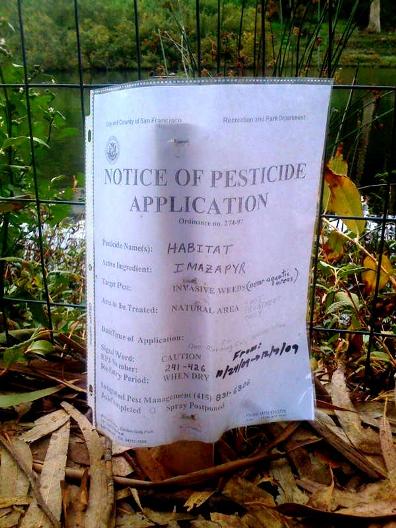
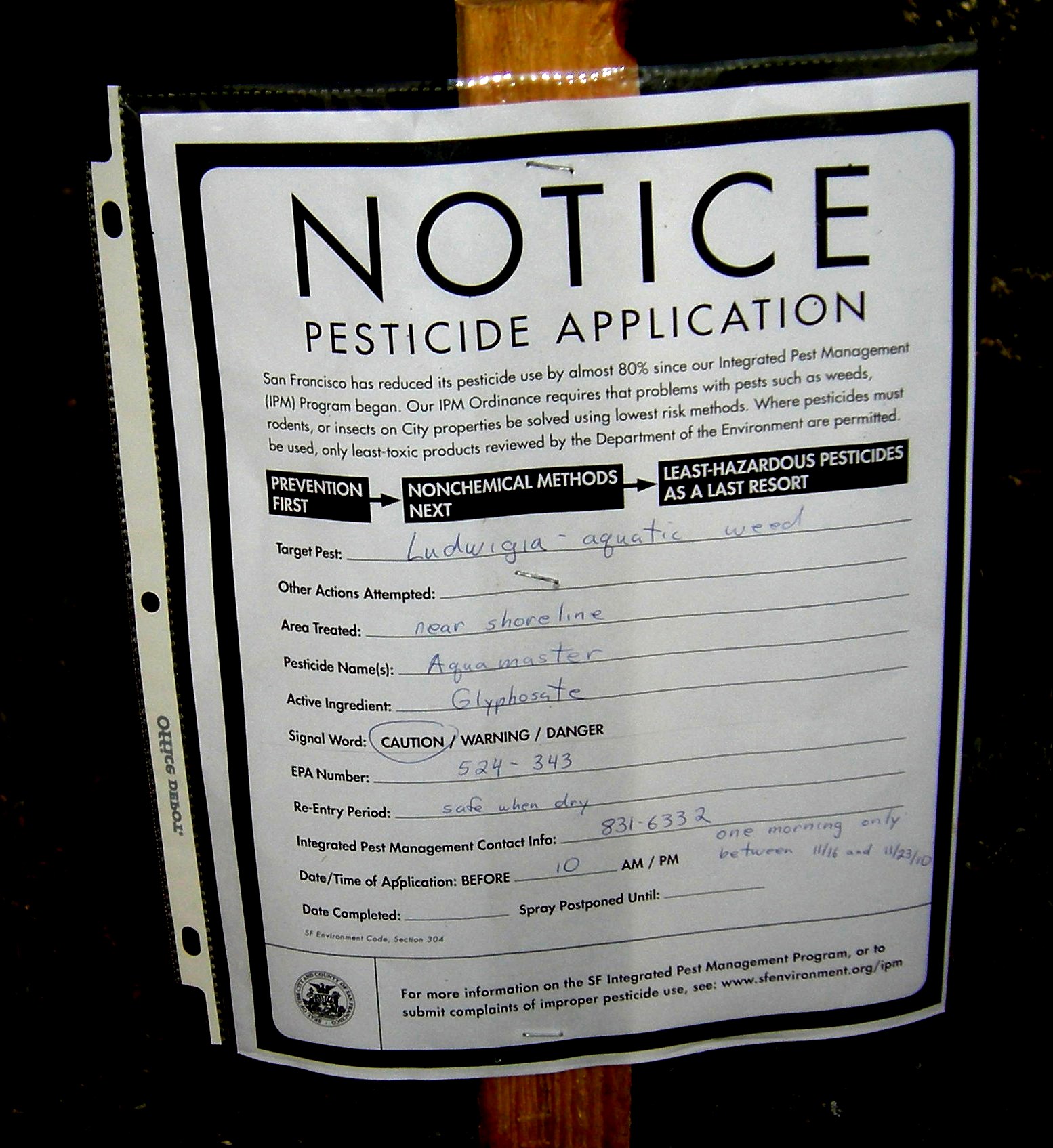
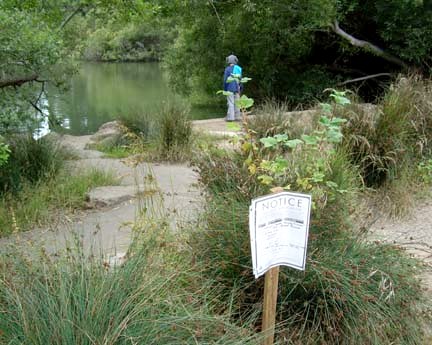
Meanwhile, there will be pesticides. The preferred pesticides this year for Natural Areas is glyphosate (Aquamaster), the pesticide linked to birth defects; and imazapyr (Polaris), the pesticide that sticks around. We’ve written about a recent application on Mt Davidson recently, now here they are in Glen Canyon Park.

We should mention that these photographs were sent to us by Glen Park neighbors, who were not pleased to see this activity.

We will give the SF RPD points for clearly marking what they’re doing, though. It’s good to know when there are poisons around. [ETA: Except, a neighbor who tried to call told us, the phone number is wrong. CORRECTION: Ralph Montana of IPM (415) 831-6314. ETA2: 831-6306 will take you to Ralph Montana. ]
So far, Mt Sutro seems to be the only wilderness in San Francisco where there have been no pesticides used in the last two years. (Thanks, UCSF!) We don’t know how long this will last. The planned projects call for pesticide use on the mountain.

Posted in Environment, Herbicides, Natural areas Program | Tagged , , , , | 3 Comments

SNRAMP, Pesticides, and Mt Davidson

It’s not just Twin Peaks and Glen Canyon and McLaren Park and Stern Grove. Here are some recent pictures we received of pesticide use on Mt Davidson.

It’s the old favorites, Aquamaster (glyphosate) and Polaris (Imazapyr). Coming soon to one of the 32 Significant Natural Resource Areas Management Plan (SNRAMP) “parks” near you (assuming you live in San Francisco, of course).

This notice says Imazapyr is being used on cotoneaster, the bush with the abundant bright red berries birds love. Before the berries there are, of course, flowers for nectar loving butterflies. Another useful habitat plant being condemned as “invasive” and poisoned. (And that doesn’t even consider the cover a bush provides for birds and small animals.)

[ETA: Incidentally, the phone number on the sign is apparently wrong and takes you to some equipment shop in the roads division. Here’s one for Ralph Montana of IPM: (415) 831-6314]

IMAZAPYR, THE PESTICIDE THAT STICKS AROUND

When we looked at the pesticides most used by the San Francisco Natural Areas Program (SFNAP) in our article Toxic and Toxic-er, here’s what we noted about Imazapyr:

“This is a very new pesticide, and not much is known about it — except that it’s very persistent. SF’s DoE has recently approved it for use as a Tier II hazard. It not only doesn’t degrade, some plants excrete it through their roots so it travels through the environment. We’ve written about this one, too, when NAP recently started using it on Twin Peaks and Glen Canyon. (Actually, NAP had started using it prior to SF DoE’s approval , in Stern Grove and also at Lake Merced in 2009 and some unspecified NAP area in 2008.)

“About its impact on people, we wrote: “it can cause irreversible damage to the eyes, and irritate the skin and mucosa. As early as 1996, the Journal of Pesticide Reform noted that a major breakdown product  is quinolic acid, which is “irritating to eyes, the respiratory system and skin. It is also a neurotoxin, causing nerve lesions and symptoms similar to Huntington’s disease.”

It’s prohibited in the European Union countries, since 2002; and in Norway since December 2001.”

AND GLYPHOSATE, ASSOCIATED WITH BIRTH DEFECTS

The other notice, which was washed out in the rain (presumably the rain that postponed the application) notes that Glyphosate and Imazapyr are to be applied to a range of plants. We couldn’t quite read the notice, even after blowing it up, but it seems to include Erhata Grass and Cape Ivy and blackberry. The last two are especially valuable habitat plants in a wild “natural” area, as we’ve discussed before. The pesticides were to be applied to “patches throughout area.”

Glyphosate, the active ingredient in Roundup and Aquamaster, is a very widely used pesticide, but new research suggests that it is much more dangerous than its manufacturer, Monsanto, says. In fact, in view of this new research, we wonder if San Francisco’s first line of defense, the Department of the Environment, would consider revisiting its Tier II classification.

Here’s what we wrote in Toxic and Toxic-er:

“We hope that in view of the new research that has been surfacing, SF’s DoE will revisit that classification and consider if it deserves a Tier I rating.

  • heart breaking

    It’s been associated with birth-defects, especially around the head, brain and neural tube — defects like microcephaly (tiny head); microphthalmia (tiny undeveloped eyes); impairment of hindbrain development; cyclopia (also called cyclocephaly – a single eye in the middle of the forehead).

  • Research indicates it kills beneficial soil fungi while allowing dangerous ones to grow.
  • It binds to the soil, and acts as a “chelating agent” – trapping elements like magnesium that plants need to grow and thus impoverishing the soil.
  • It’s very dangerous to frogs and other amphibians, and quite dangerous to fish.”

FIGHTING WITH  NATURE

What’s been achieved? We’re not sure. The use of pesticides is a continuing process. Nature doesn’t give in easily.

Posted in Herbicides, Natural areas Program | Tagged , , , , , , | 1 Comment

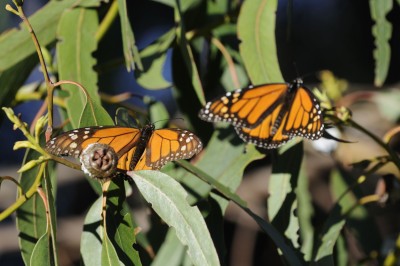
Monarch Butterflies in Eucalyptus in San Francisco

Like everyone else, we knew that Monarch butterflies visit California’s coast in winter. What we didn’t know was that they’re right here in San Francisco!

Monarch butterflies in eucalyptus, california. 123rtf.com

(The picture here isn’t from San Francisco, it’s from a commercial stock-photo site.)

MONARCHS AMONG US

For the past few weeks, Liam O’Brien, San Francisco’s own butterfly watcher extraordinaire, has been on the lookout for Monarch butterflies, especially for clusters. He found a trove of them on the huge old eucalyptus trees of  Treasure Island and Yerba Buena, with the help of a couple of other people who’d spotted them there. (His blogpost about seeing over a hundred of these butterflies, Yerba Buena Island Hopping with Monarchs, advised people who wanted to see them there to take the #108 bus from downtown San Francisco, and look in the eucalyptus trees along the road near the old buckeye grove up from Clipper Cove. He also warned that some areas of the island are restricted to the public.)

And then… he found a cluster in the eucalyptus at Fort Mason. He reports about that is on his blogpost, First Monarch Roost I’ve Seen in SF County.  A video of that cluster in the eucalyptus is up on Youtube. (Scroll down to the comments for a link to the video.)

Then, back on Yerba Buena/ Treasure Island,  he recently counted over 600 of these butterflies, including a cluster. Mostly in eucalyptus.

[ETA: Mr O’Brien, incidentally, does not support our interest in Saving Sutro Forest, which he considers “Sutro’s hideous legacy.” See comments below.]

MONARCHS LOVE EUCALYPTUS

What’s special about eucalyptus, a tree that was introduced to California only in the last 150 years? The Monarch butterflies, which have been around and migrating a good deal longer than that, couldn’t have co-evolved with eucalyptus. It’s not just familiarity.

Eucalyptus is actually an excellent habitat-tree for monarchs. It’s tall, which keeps them out of the way of ground-dwelling predators such as mice. And it flowers in winter, providing nectar. In fact, eucalyptus is an excellent winter food source for a large number of insects — and for the birds that want either the nectar or the insects supported by these flowers.

Liam O’ Brien, writing in Jake Sigg’s newsletter, notes that one possible reason the eucalyptus is a preferred overwintering site is that they bloom in winter. “ Makes sense,” he says.

Given the huge habitat value of blue-gum eucalyptus, what doesn’t make sense is chopping them down.

Posted in eucalyptus, Natural areas Program | Tagged , , , , , , | 7 Comments

Mt Sutro Forest: New Trail, No EIR

UCSF has a detailed plan for Mount Sutro’s forest.

It involves  adding three new trails (shown in dark red on the map):

  • The Christopher/ South Ridge Trail (parallel to Christopher on the map) ;
  • The Clarendon/ South Ridge Trail (joining the Christopher/ South Ridge Trail and shaped like a hairpin); and
  • The Campus/Historic Trail. (The wiggly red line from Medical Center Way.)

(The plan also involves  felling thousands of trees, first in four areas of the forest comprising 7.5 acres  8.5 acres – the yellow areas on the map below – then eventually everywhere they can reach).

An Environmental Impact Report is in preparation, and will be opened for comments after it’s drafted. Only after the comments have been received, considered, and responded to would the planned actions proceed.

Or so one would think.

SUTRO TRAIL SURPRISE

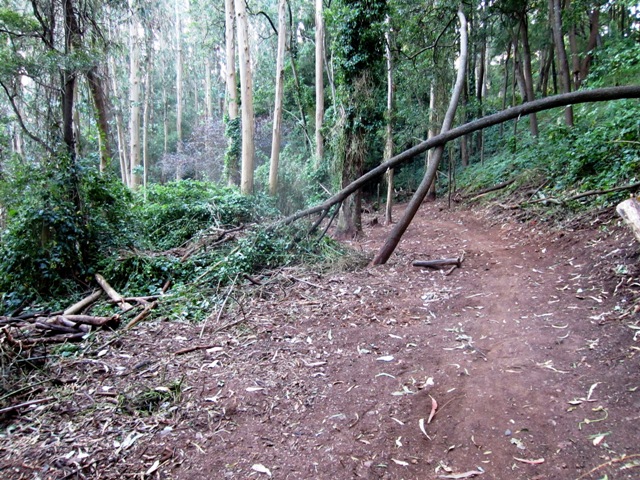
So we were surprised, on a recent visit to the forest, to find a huge new trail hacked into the forest. It’s one of the trails proposed in the Plan, the top half of the “Christopher-South Ridge” trail.  It joins the Nike Road, just above the Gash left by the SF Water Department, to the South Ridge. (These points are already joined by the Nike Rd and the South Ridge Trail.)

It punches right through the top of the area (#5 on the map above) that was supposed to be left “untouched” in the Project.

We saw a recent call for trail-work volunteers from the Sutro Stewards, the organization headed by Craig Dawson, which provides the volunteers working Mount Sutro. We wondered what they meant, since the major recent effort, the Kill-trees trail, is done.

Now we know.

There were no meetings, no intimation from UCSF that such a trail was being built before completion of the Environmental Impact Report. They’re aware it’s a sensitive issue, because the meetings have been quite vociferous.

We’re disappointed. And surprised, but not very surprised.

[ETA: We’ve put in the map to clarify, and edited the post to correspond to the map.]

Posted in Mount Sutro Stewards, Mt Sutro Cloud Forest, UCSF | Tagged , , , , , , | 9 Comments

Glen Canyon Park: Birds, Habitat, and the Significant Natural Resource Areas Management Program (SNRAMP)

photo credit: Janet Kessler

Recently, we attended a meeting where we were given a beautiful pamphlet regarding the Feathered Friends of Glen Canyon Park. It pictured 45 species of birds that have been sighted in the park (including flyovers). And it said:

Willows that line the creek host nesting chickadees, warblers, woodpeckers and sparrows; they also offer food and shelter for other animals. Native trees like hillside oaks support many species passing through in spring and fall. Non-native eucalyptus trees have hosted nesting Great Horned Owls and Red-tailed Hawks for may years, while migrant tanagers, orioles, and warblers sing from their highest reaches every spring.”

It was doubly ironic, then, that habitat destruction seems to be the plan for Glen Canyon Park. Only a few days earlier,  The SNRAMP’s contractors were using chainsaws and work-crews to hack through the habitat that has been so useful to birds and coyotes and other creatures that live in Glen Canyon Park.

Said an observer who sent us the pictures below:

“Yesterday volunteers were “building and expanding a butterfly habitat” — more of the willows are down. They told me: “there are other willows the coyotes can use.” What they don’t seem to understand is that the coyotes and raccoons and birds need not just some willows, but entire thickets where they can hide.”

“… NAP people are in the thicket in the very back part of the park which no one uses — it has been a dense and impenetrable thicket for decades. Six of them with big gas-run chain saws are sawing through that growth “creating a buffer so that they can take out the ‘invasive’ ivy so that “native plants can grow.” Again, this is our wildlife habitat. There goes another section of our wilderness.”

The plan seems to be to destroy habitat that wildlife is already using, in an attempt to create a different habitat for wildlife that isn’t there.

In this case, the NAP had contracted Shelterbelt Builders (which also does a lot of the pesticide application for SF Rec and Park) to chainsaw out the habitat.

Our tax dollars at work.


Posted in Environment, nativism, Natural areas Program | Tagged , , , , | 1 Comment

The Summer Tanager and San Francisco’s Non-Native Plants

One of the more interesting groups to watch, if you like birds, is the Yahoo group SF Birds. (Anyone can read it, but you must join to post in it. [ETA: It’s apparently been changed to a members-only group; only members can read it. This is also true of the links to individual posts, so we’ve taken them out.])  It has over 1,000 members at this writing, but a smaller dedicated group of local birders use it to communicate the whereabouts of rare-in-San Francisco species. Often, someone follows up with links to beautiful photographs. That’s where we found the story of the Summer Tanager.

THE SUMMER TANAGER VISITS SAN FRANCISCO

Summer Tanager, San Francisco. Copyright Mark Rauzon

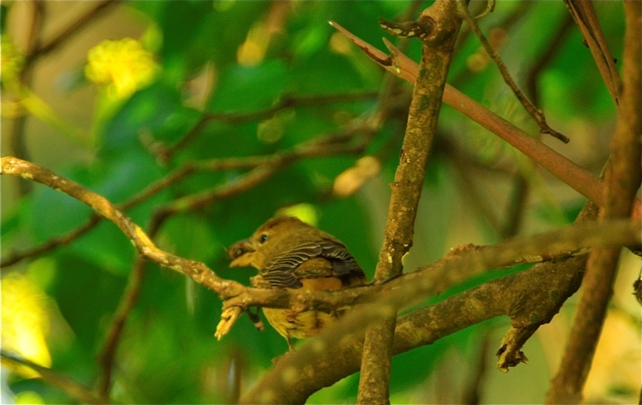
This is a small songbird that’s a rare winter visitor to San Francisco. The males are a bright red color, the females and immature males are yellow. They feed on insects (bees, wasps and so on) and berries. Recently, birder Alan Hopkins reported seeing a female Summer Tanager [ETA: this link is now accessible only to members] in Golden Gate Park: “… you will find English Ivy growing up some trees. The tanager was catching bees that are feeding on the ivy.

Of course, other birders followed up. Steven Tucker wrote: “…the Summer Tanager was where Alan described it. There are 2 huge columns of ivy adjacent to one another; the
tanager was often in the right-hand clump or in the Eucalyptus trees around it.

Then birder Mark Rauzon posted some wonderful pictures of this little bird in his Zenfolio portfolio. “I found it by it’s ‘churrip’ call at 1:30pm, Monday in the ivy covered Eucalyptus … It was bee-eating and occasionally dropping down to eat blackberries, where I had this face to face encounter.” (The pictures here are reproduced with his permission. They’re copyright. Anyone who wants to use them should check with him at mjrauz@aol.com )

Summer Tanager and Blackberries, San Francisco. Copyright Mark Rauzon

NON-NATIVE PLANTS AS HABITAT

It’ll come as no surprise to birders that non-native plants provide habitat. After all, many of the posts in the SF Bird group describe birds in flowering eucalyptus trees, either for the nectar or the insects attracted to the nectar. (We hope that any birders who still believe eucalyptus trees suffocate birds will check this article, Another Eucalyptus Myth: Bird Death) They mention birds in the blackberry bushes, which provide not only food by way of berries and insects, but excellent cover.  Like the notes above, they mention birds hiding in ivy.

In our article Interwoven and Integrated: Non-native and Native Species in Life’s Web,  we described how native species and non-native species are part of the same functional habitat. This is another example.

  • The eucalyptus (non-native) provides support for the ivy (non-native)
  • which attracts insects (both native and non-native),
  • which become food for the Summer Tanager and other birds (mostly native).

The blackberry bushes work in much the same way; they attract insects, they provide berries, and they provide hiding places. So does eucalyptus – it flowers through the year, and particularly in winter, provides sustenance to birds and insects. (ETA: See the comments below for Monarch butterflies clustering in eucalyptus at Fort Mason in San Francisco.) It also provides nesting spots and cover.

Pointing this up was the most recent post  on the Summer Tanager, from Richard Bradus: “…an immature Red-tailed Hawk alighted, drawing an even dozen Ravens in pursuit. As they rose and flew off the bushes came alive, and out popped the female Summer Tanager. It made a few sorties from the ivy then, after devouring a particularly fat insect (bee?), it retreated to cover.

Summer Tanager eating bee, San Francisco. Copyright Mark Rauzon

Posted in Environment | Tagged , , , | 4 Comments

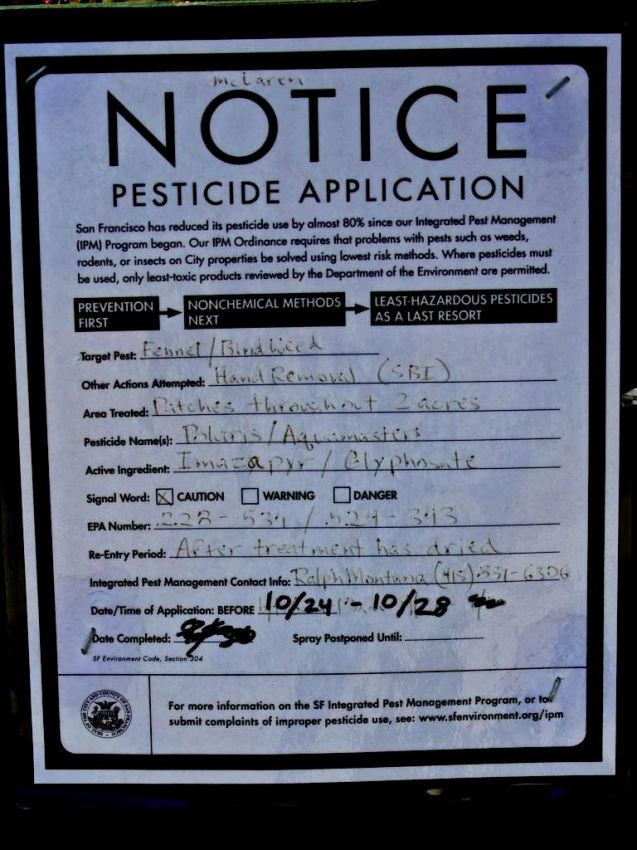
SF Natural Areas Program: Imazapyr, Glyphosate Pesticides at McLaren Park

It looks like the SF NAP is using a lot of Imazapyr since San Francisco’s Department of the Environment approved it earlier this year.

We’ve seen signs on Twin Peaks, in Glen Canyon, at Stern Grove. Now someone has sent us photos of notices in McLaren Park.

This is despite these facts about Imazapyr:

  • It doesn’t bio-degrade easily;
  • It is pushed out by the roots of some plants it’s used on, thus spreading it further than intended;
  • Its breakdown product is neurotoxic;
  • It’s banned in the European Union.

In other words, this product, once applied, will spread further than it was applied, will hang around, and when it does break down will become a chemical that is neurotoxic. (Our initial article on Imazapyr is here.) It’s too poisonous for the EU, but it’s okay for San Francisco.

Source: Wikimedia commons

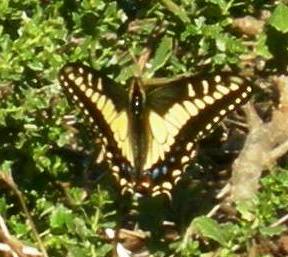
This time, it’s being used against fennel (the nursery plant of the native Anise Swallowtail butterfly) and bindweed.

It’s being used, apparently, along with glyphosate. We hope they’re not being used together. In most cases, very little or no research exists about two pesticides being used together. They may have synergistic effects that either one used along doesn’t have.

Again, there’s some confusion about the completion date. This sign had one filled in, but it’s been scribbled out. The dates of application also appear to have been overwritten. This raises questions: Did they just recycle an old notice? And, did they spray or didn’t they?

IMAZAPYR IN THE BAY

Of course, the Bay Area has a lot of (unexamined) experience with Imazapyr. We’ve been spraying it in the Bay for years, as part of a vegetation control project that has harmed Clapper Rail habitat.

This project attempts to battle spartina alterniflora (smooth cordgrass), a marsh plant native to the East Coast but not, apparently, to the West Coast. It is grows denser than the West Coast species, and it also grows year-round, unlike the local variety. Thus, it provides great cover and nesting sites for the Clapper Rail, a marsh bird whose numbers have been falling. Nativists have blamed red foxes, also native to other parts of the US.

But as this article, Nativism is Shooting us in the Foot on the website Death of a Million Trees points out, red foxes are native to the East Coast, and there both they and the Clapper Rail (and the spartina!) thrive.

Pouring on the Imazapyr and destroying the spartina alterniflora have demonstrably destroyed habitat. It’s also left a legacy chemical to join all the others in the Bay. Is this really something we want to replicate in San Francisco’s “Natural Areas”?

Posted in Herbicides, Natural areas Program | 3 Comments

The Bees of Glen Canyon Park

This was going to be a post about the San Francisco Natural Areas Program (SF NAP) destroying a hive of feral honeybees in Glen Canyon Park. It still is, but with less anger.

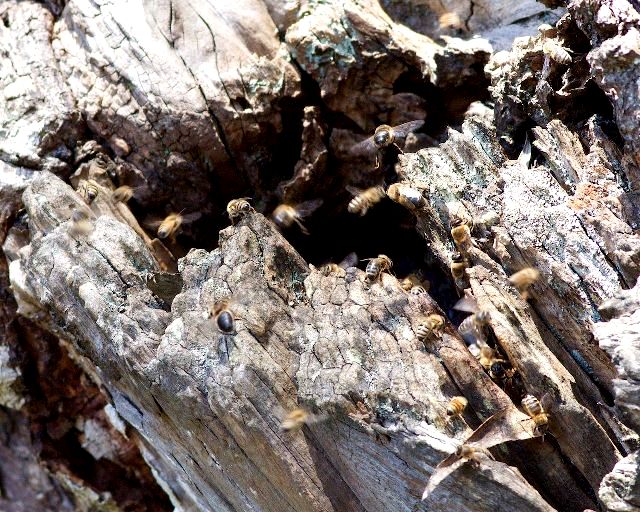
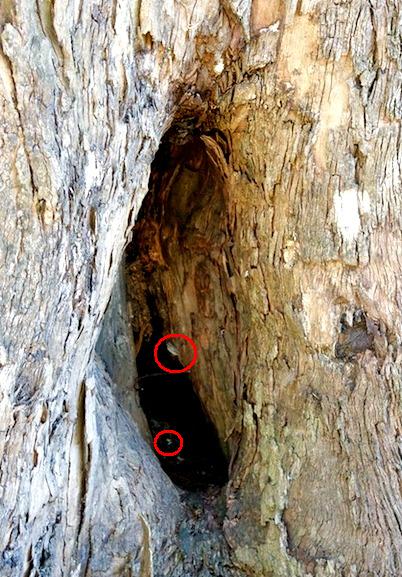
In a tree behind the rec center, about 9 or 10 feet off the ground, a nest of feral honey bees had made their home. It was one of three in Glen Canyon Park, and it was thriving. Here’s what it looked like in April 2011:

Here’s what it looked like after it was destroyed on 15 October 2011. Said the person who sent in the picture, “Note the sad hapless bee trying to get into her hive…”

This nest had been there for a long time, and bee-lovers had been watching it. It was registered with the Feral Bee project.

People were furious. “I have a ladder and drill, who would like to climb it tonight to drill out the foam?” someone posted. (Of course it wasn’t going to work that easily; the colony had likely been poisoned first. The pesticides SF NAP usually uses in these cases is a mix of phenothrin and D-trans Allethrin.)

What happened? everyone wanted to know.

Someone spoke to a Rec and Parks employee about it. He said they were hornets or wasps. He expected the stragglers like the bee up there would find a home elsewhere. He gave no assurances about saving other hives.

The San Francisco Bee-keepers Association wrote to SF NAP.

SF NAP’s RESPONSE

There was an immediate positive response. Lisa Wayne, Manager of the SF NAP, wrote back to say,

“I am dismayed to hear that a bee hive may have been destroyed in Glen Canyon.  For several years, there have been at least two bee hives in eucalyptus trees in the Canyon.  Many years ago, RPD installed a fence around the one near Silvertree as a way to keep the children and other park patrons away from it and to protect the colony.  I am a beekeeper myself as well as allergic to yellow jackets and wasps and fully understand the difference between these species and docile nature of honey bees.  We do control yellow jackets and wasps in areas near trails and other public facilities.  I am not in favor of, and I don’t believe our Department is in favor of, eradicating honey bee hives.”

That was a good start. Even better, she followed up by actually investigating the incident with the concerned people in her department.

The person who sealed the nest explained what happened. He’d received information that a park visitor had been stung. He contacted her, and she said she had been stung while helping someone else who’d been stung several times. When the Parks employee checked it out, he found the insects flying angrily around the nest.

The nest appeared to be aggressive and moving like hornets at the time of this inspection.  After speaking with the park gardener, the distraught park patron, and performing a site inspection, with the information at hand I made a decision to take action to treat and seal the nest.

At dawn the next morning, he poisoned the nest with an “Eco-exempt product” (from their previous records, wasps and hornet nests are treated with 499, an insect killer – the mixture referred to above), “and sealed the opening with foam sealant and cement.” Since the nest was quiet so early in the morning, he didn’t realize they were honeybees.

He was unpleasantly surprised when he was informed that they were.

“It is not my practice to exterminate or discourage honeybees or other pollinators including wasp and hornets unless they pose a threat to public health and safety.  In this case the persons who where stung felt their safety was in jeopardy.  I did an inspection of the area, getting as close as I could without putting my safety in danger.  It seems that regretfully these were feral bees.  In hindsight and with better information I would have slowed the process down.  In the future if it is not a cut-and-dry wasp nest treatment, I will take more time in the evaluation process.”

He concluded,  “I am disappointed by the results of the incident and will review how I may handle this type of situation in the future…

In her note on the subject, Lisa Wayne said,

As the Manager that oversees the IPM [Integrated Pest Management] Division, I am taking corrective action to reduce the potential of future incidents such as this.  Please be assured that it is not the policy of SFRPD to eradicate honey bee hives; by contrast it is our policy to protect feral hives in situ as much as possible.  If a hive is located in a place where it is perceived to be a health and safety hazard, we will take measures such as signage and fencing first before trying to move the hive.  Our IPM  unit has in the past coordinated with local bee keepers to move hives where access to the queen is possible.  We will continue to take this approach.

A SAD REMINDER

For those who watched this nest regularly, its loss is keenly felt, and they regret that SF NAP didn’t spot it sooner and fence it off as they have done with other feral bee colonies in the Park. As the person who sent us this noted, “walking by that tree is always a sad reminder of the hive.”

Still, it’s reassuring to know that the destruction was accidental and that SF NAP is taking steps to prevent a recurrence. This may help to preserve the other nests we know are in Glen Canyon.

We hope SF NAP will be as considerate of other birds and animals whose habitat is being destroyed in Natural Areas with the cutting down and poisoning of thickets and trees.

Another nest of feral bees

Posted in Environment, Natural areas Program | Tagged , , | 6 Comments

USCF, Sutro Stewards, and the fund-raising “Fire Hazard”

Here we go again.

We’d thought, after FEMA’s  letter that suggested that UCSF’s application had exaggerated the fire hazard in Mount Sutro Forest, that UCSF would back off an assessment clearly based on misunderstood and misinterpreted information. After all, Cal Fire has declared the fire hazard “moderate” – its lowest rating.

(For those new to the background: UCSF attempted to get a FEMA – Federal Emergency Management Agency – grant on the same basis in 2008/ 2009.  FEMA had many questions about the veracity of the claim and UCSF withdrew that application. That story, and an excerpt from the FEMA letter obtained under the Freedom of Information Act, FOIA, are here: “The Fire Hazard that Wasn’t.”)

We were wrong. A few months ago, UCSF applied — with support from the Sutro Stewards — for a grant of $75,000 from the California Fire Safe Council.

And it’s again raising the spectre of acute fire danger in what may be the wettest place in San Francisco that’s not actually under water.

A CLOUD FOREST ISN’T DRY

The application starts with a reference to the East Bay:


It doesn’t note that the East Bay has a completely different climate from San Francisco’s fog belt. The East Bay climate is more extreme and much drier – it’s hotter in summer and colder in winter, even going to below freezing. It also doesn’t note that any tree would have fueled the East Bay fire, which were driven by hot dry winds that don’t occur in San Francisco. (In fact, eucalyptus is not an especial risk factor even in the East Bay.)

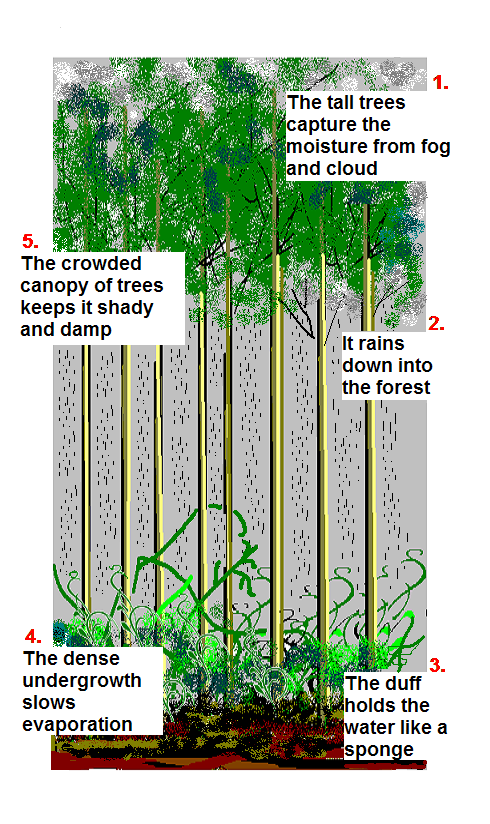
This forest lies completely within San Francisco’s fog belt, which makes this century-old dense forest functionally a cloud forest. In addition to the rainfall, it gets 33% more moisture from harvesting fog all through the summer.  As a result, it is damp or wet year round.  When we kept a “fog log” in 2009, a dry year, we found the longest “dry spell” for the forest (i.e., no fog, no rain) was seven days. At no time did the forest dry out at all.

The planned actions — thinning the forest  and removing undergrowth — will actually *increase* the fire hazard by opening up the cloud forest and causing it to dry out. At present, the forest is always damp and often wet, even when there has been no rain.

NOT AN UNHEALTHY FOREST

The application insists that the forest is unhealthy, and infested with dangerous pests, including the “newly detected eucalyptus snout beetle.”

(We presume that should be 45,000 trees, not 4500.)

In fact, when we asked a certified arborist to examine the forest, they found it healthy. We published the relevant excerpt here. The number of dead and dying trees are normal for a naturalized forest. This is a forest, not a garden. The “snags” or standing dead trees are also critical as habitat elements for birds, especially woodpeckers and flickers, and the insects on which they feed. Because the forest is damp year-round, they do not become a fire hazard.

A certain level of insect activity is also normal in a naturalized forest. They’re part of the food chain. And as for the particularly-mentioned Snout Beetle?

The Snout Beetle is largely found in southern California, and has been effectively controlled with a parasitic wasp deliberately released. According to the University of California’s website, California Agriculture Online,

“Consequently, where pesticide use has not disrupted the actions of the parasitoid, there have not been further reports of damage, and the biological control program has provided an effective and permanent solution to the problem, requiring no further input.”

Mount Sutro Forest has been free of pesticide use for several years.

ARE THE TRAILS A FIRE HAZARD?

We thought this issue had been addressed at the hearings about the new trail that opened last year. Neighbors were very concerned that the trails would increase the fire hazard by increasing ignition risk. Ray Moritz, a forester, described the fire hazard as “mild” and described his experiments to demonstrate that ignition risk was low. (We published a report of that meeting, based on contemporaneous notes. Craig Dawson, Executive Director of the Sutro Stewards who has signed a letter of support for this UCSF application, was present at that meeting.)

So we were surprised to find this statement in the application:

It’s exactly what neighbors were assured was not the case. Mr Moritz also pointed out that the “window” — periods of “low humidity and high temperature” were small in San Francisco. And in fact, given the cloud forest conditions with summer fog, it’s even smaller in this forest.

CALLING FIRE IN A CROWDED NEIGHBORHOOD

Here’s why we’re dismayed by this effort to raise funds with a purported fire danger:

1. The proposed actions can actually increase the fire hazard by opening the forest and drying it out. Plans to amputate vines to ten feet above the ground will leave trees full of drying and flammable leaves and twining stems. And plans to leave the chipped and fallen trees and logs in the forest will only increase the fuel.

2. The forest is surrounded by residential neighborhoods. Aside from unnecessarily frightening the residents, the purported fire hazard can become an issue both for insurance and for disclosure at the time of sale of homes in these neighborhoods — even if it’s not true.

3. If the fund-raising succeeds, it diverts funds from other areas where they would actually reduce fire risk, not increase it.

Posted in Mount Sutro Stewards, Sutro Forest "Fire Risk", UCSF | Tagged , , , , | 2 Comments

Native Restorations Don’t “Restore” Anything – Professor Arthur Shapiro

We are reprinting, with permission, Professor Shapiro’s comments on the Draft Environmental Impact Report on the Significant Natural Areas Program. It was first published on Death of a Million Trees.

————————————————————————-

Mission blue butterfly Wikimedia Commons

With permission and in its entirety we are publishing the comment of Arthur M. Shapiro. He is Distinguished Professor of Evolution and Ecology at UC Davis and a renowned expert on the butterflies of California. We hope that you will take his credentials into consideration as you read his opinion of native plant restorations in general and the Natural Areas Program in San Francisco in particular. We hope that Professor Shapiro’s comment will inspire you to write your own comment by the deadline, which has been extended to October 31, 2011. Details about how to submit your comment are available here.

*************************

October 6, 2011

Mr. Bill Wycko

San Francisco Planning Department

Re: DRAFT EIR, NATURAL AREAS PROGRAM

Dear Mr. Wycko:

Consistent with the policy of the University of California, I wish to state at the outset that the opinions stated in this letter are my own and should not be construed as being those of the Regents, the University of California, or any administrative entity thereof. My affiliation is presented for purposes of identification only. However, my academic qualifications are relevant to what I am about to say. I am a professional ecologist (B.A. University of Pennsylvania, Ph.D. Cornell University) and have been on the faculty of U.C. Davis since 1971, where I have taught General Ecology, Evolutionary Ecology, Community Ecology, Philosophy of Biology, Biogeography, Tropical Ecology, Paleoecology, Global Change, Chemical Ecology, and Principles of Systematics. I have trained some 15 Ph.D.s, many of whom are now tenured faculty at institutions including the University of Massachusetts, University of Tennessee, University of Nevada-Reno, Texas State University, and Long Beach State University, and some of whom are now in government agencies or in private consulting or industry. I am an or the author of some 350 scientific publications and reviews. The point is that I do have the bona fides to say what I am about to say.

At a time when public funds are exceedingly scarce and strict prioritization is mandatory, I am frankly appalled that San Francisco is considering major expenditures directed toward so-called “restoration ecology.” “Restoration ecology” is a euphemism for a kind of gardening informed by an almost cultish veneration of the “native” and abhorrence of the naturalized, which is commonly characterized as “invasive.” Let me make this clear: neither “restoration” nor conservation can be mandated by science—only informed by it. The decision of what actions to take may be motivated by many things, including politics, esthetics, economics and even religion, but it cannot be science-driven.

In the case of “restoration ecology,” the goal is the creation of a simulacrum of what is believed to have been present at some (essentially arbitrary) point in the past. I say a simulacrum, because almost always there are no studies of what was actually there from a functional standpoint; usually there are no studies at all beyond the merely (and superficially) descriptive. Whatever the reason for desiring to create such a simulacrum, it must be recognized that it is just as much a garden as any home rock garden and will almost never be capable of being self-sustaining without constant maintenance; it is not going to be a “natural,” self-regulating ecosystem. The reason for that is that the ground rules today are not those that obtained when the prototype is thought to have existed. The context has changed; the climate has changed; the pool of potential colonizing species has changed, often drastically. Attempts to “restore” prairie in the upper Midwest in the face of European Blackthorn invasion have proven Sisyphean. And they are the norm, not the exception.

The creation of small, easily managed, and educational simulacra of presumed pre-European vegetation on San Francisco public lands is a thoroughly worthwhile and, to me, desirable project. Wholesale habitat conversion is not.

A significant reaction against the excesses of the “native plant movement” is setting up within the profession of ecology, and there has been a recent spate of articles arguing that hostility to “invasives” has gone too far—that many exotic species are providing valuable ecological services and that, as in cases I have studied and published on, in the altered context of our so-called “Anthropocene Epoch” such services are not merely valuable but essential. This is a letter, not a monograph, but I would be glad to expand on this point if asked to do so.

I am an evolutionary ecologist, housed in a Department of Evolution and Ecology. The two should be joined at the proverbial hip. Existing ecological communities are freeze-frames from a very long movie. They have not existed for eternity, and many have existed only a few thousand years. There is nothing intrinsically sacred about interspecific associations. Ecological change is the norm, not the exception. Species and communities come and go. The ideology (or is it faith?) that informs “restoration ecology” basically seeks to deny evolution and prohibit change. But change will happen in any case, and it is foolish to squander scarce resources in pursuit of what are ideological, not scientific, goals with no practical benefit to anyone and only psychological “benefits” to their adherents.

If that were the only argument, perhaps it could be rebutted effectively. But the proposed wholesale habitat conversion advocated here does serious harm, both locally (in terms of community enjoyment of public resources) and globally (in terms of carbon balance-urban forests sequester lots of carbon; artificial grasslands do not). At both levels, wholesale tree removal, except for reasons of public safety, is sheer folly. Aging, decrepit, unstable Monterey Pines and Monterey Cypresses are unquestionably a potential hazard. Removing them for that reason is a very different matter from removing them to actualize someone’s dream of a pristine San Francisco (that probably never existed).

Sociologists and social psychologists talk about the “idealization of the underclass,” the “noble savage” concept, and other terms referring to the guilt-driven self-hatred that infects many members of society. Feeling the moral onus of consumption and luxury, people idolize that which they conceive as pure and untainted. That may be a helpful personal catharsis. It is not a basis for public policy.

Many years ago I co-hosted John Harper, a distinguished British plant ecologist, on his visit to Davis. We took him on a field trip up I-80. On the way up several students began apologizing for the extent to which the Valley and foothill landscapes were dominated by naturalized exotic weeds, mainly Mediterranean annual grasses. Finally Harper couldn’t take it any more. “Why do you insist on treating this as a calamity, rather than a vast evolutionary opportunity?” he asked. Those of us who know the detailed history of vegetation for the past few million years—particularly since the end of Pleistocene glaciation—understand this. “Restoration ecology” is plowing the sea.

Get real.

Sincerely,

Arthur M. Shapiro

Distinguished Professor of Evolution and Ecology

Posted in Environment, nativism, Natural areas Program | Tagged , , , , | 1 Comment

Killing Healthy Trees in SF’s “Natural Areas”

We referred to this article in our summary of the mistakes in the Draft Environmental Impact Report on SF’s Natural Areas. We are now reprinting it with permission (and minor edits) from the website, Death of a Million Trees. It points out a  flaw in the logic of the Draft Environmental Impact Report (DEIR) on the Significant Natural Resource Areas Management Plan for San Francisco. The DEIR refers frequently to removing “dead and dying trees” — yet when you actually look at the details, that’s not what they intend at all. Thousands of healthy trees are at risk.

————————————————————————

THE HEALTHY TREES OF SAN FRANCISCO

The San Francisco Natural Areas Program (NAP) plans to destroy thousands of healthy trees in San Francisco’s parks.  The Draft Environmental Impact Review (EIR) for NAP’s destructive plan reaches the bizarre conclusion that removing thousands of trees will have no significant impact on the environment.   This conclusion is based on several fictional premises.  In a previous post we examined the fictional claim that all the trees that will be removed will be replaced within the natural areas by an equal number of trees that are native to San Francisco.  In this post we will examine another of the fictional premises:  that only dead, dying, hazardous, or unhealthy trees will be removed.

We have many reasons to challenge the truth of the claim that only dead, dying, hazardous or unhealthy trees will be removed:

  • The management plan for the Natural Areas Program tells us that young non-native trees under 15 feet tall will be removed from the natural areas.  By definition these young trees are not dead or unhealthy because they are young and actively growing.
  • The management plan has not selected only dead, dying, hazardous trees for removal.  Trees have been selected for removal only in so far as they support the goal of expanding and enhancing areas of native plants, especially grasslands and scrub.
  • The predominant non-native tree in San Francisco, Blue Gum eucalyptus lives in Australia from 200-400 years, depending upon the climate.[i]  In milder climates, such as San Francisco, the Blue Gum lives toward the longer end of this range.
  • However, there are many natural predators in Australia that were not imported to California. It is possible that the eucalypts will live longer here:  “Once established elsewhere, some species of eucalypts are capable of adjusting to a broader range of soil, water, and slope conditions than in Australia…once released from inter-specific competitions and from native insect fauna…”[ii]
  • The San Francisco Presidio’s Vegetation Management Plan reports that eucalypts in the Presidio are about 100 years old and they are expected to live much longer: “blue gum eucalyptus can continue to live much longer…”[iii]
  • The Natural Areas Program has already destroyed hundreds of non-native trees in the past 15 years.  We can see with our own eyes, that these trees were not unhealthy when they were destroyed.

How have mature trees been selected for removal?

The EIR wants us to believe that only dead, dying, hazardous trees will be removed from the natural areas.  This claim is contradicted by the management plan that the EIR is claiming to evaluate.  Not a single explanation in the management plan for why specific trees over 15 feet tall have been selected for removal is based on the health of the trees.  (Trees less than 15 feet tall will also be removed, but are not counted by the management plan.)

  •  Lake Merced:  The explanation for removing 134 trees is “To maintain and enhance native habitats, it is necessary to selectively remove some trees.”
  • Mt. Davidson:  The explanation for removing 1,600 trees is: “In order to enhance the sensitive species habitat that persists in the urban forest understory and at the forest-grassland ecotone, invasive blue gum eucalyptus trees will be removed in select areas. Coastal scrub and reed grass communities require additional light to reach the forest floor in order to persist “
  • Glen Canyon:  The explanations for removing 120 trees are:  “to help protect and preserve the native grassland” and “to increase light penetration to the forest floor”
  • Bayview Hill:  The explanation for removing 505 trees is:  “In order to enhance the sensitive species habitat that persists in the urban forest understory and at the forest-grassland ecotone, invasive blue gum eucalyptus trees will be removed in select areas.”
  • McLaren:  The explanation for removing 805 trees is:  “In order to enhance the sensitive species habitat that persists in the urban forest understory and at the forest-scrub-grassland ecotone, invasive trees will be removed in select areas. Coastal scrub and grassland communities require additional light to reach the forest floor in order to persist.”
  • Interior Greenbelt:  The explanation for removing 140 trees is:  “In order to enhance the seasonal creek and sensitive species habitat that persists in the urban forest understory, invasive blue gum eucalyptus trees will be removed in select areas.” [Note from Webmaster: This is in Mount Sutro Forest, on the Cole Valley side.]
  • Dorothy Erskine:  The explanation for removing 14 trees is:  “In order to enhance the grassland and wildflower community, removal of some eucalyptus trees is necessary.”

In not a single case does the management plan for the Natural Areas Program corroborate the claim made in the EIR that only dead, dying, diseased, or hazardous trees will be removed.  In every case, the explanation for the removal of eucalypts is that their removal will benefit native plants, specifically grassland and scrub.  The author of the EIR has apparently not read the management plan or has willfully misrepresented it.

WHAT’S THE TREE REMOVAL TRACK RECORD?

Although it’s interesting and instructive to turn to the written word in the management plan for the Natural Areas Program to prove that the  Draft EIR is based on fictional premises, the strongest evidence is the track record of tree removals in the past 15 years.  As always and in every situation, actions speak louder than words.

Hundreds of trees have been removed in the natural areas since the Natural Areas Program began 15 years ago.  We’ll visit a few of those areas with photographs of those tree removals to prove that healthy, young non-native trees have been destroyed.  This track record predicts the future:  more healthy young trees will be destroyed in the future for the same reason that healthy young trees were destroyed in the past, i.e., because their mere existence is perceived as being a barrier to the restoration of native grassland and scrub.

girdled eucalyptus trees on bayview hill san francisco

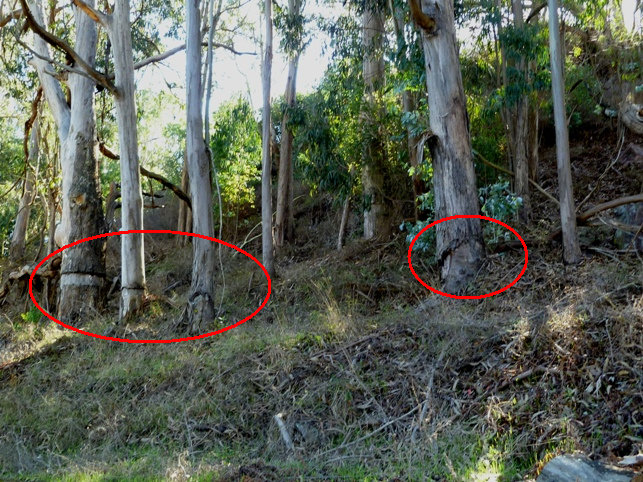
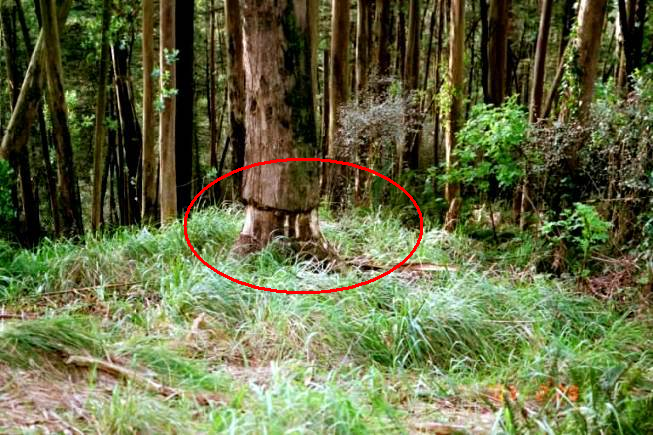
The first tree destruction by the Natural Areas Program and its supporters took the form of girdling about 1,000 healthy trees in the natural areas about 10 to 15 years ago.  Girdling a tree prevents water and nutrients from traveling from the roots of the tree to its canopy.  The tree dies slowly over time.  The larger the tree, the longer it takes to die.  None of these trees were dead when they were girdled.  There is no point in girdling a dead tree.

One of about 50 Girdled Trees on Mount Davidson, 2003

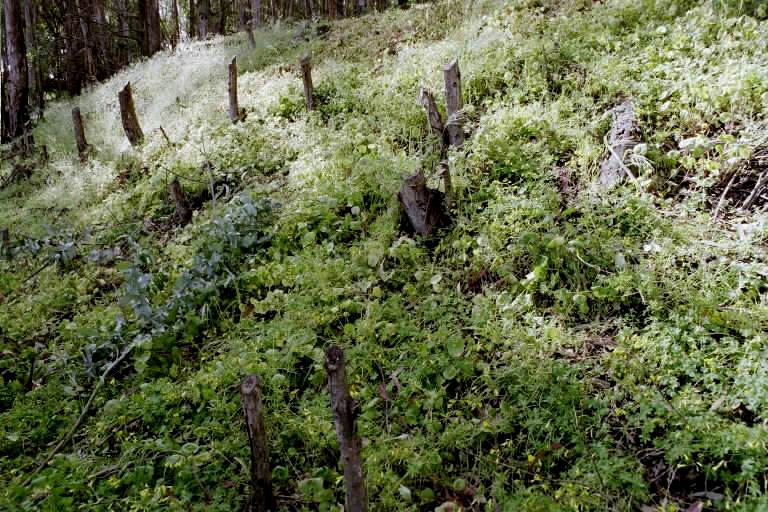
Many smaller trees that were more easily cut down without heavy equipment were simply destroyed, sometimes leaving ugly stumps several feet off the ground.

Small eucalyptus stumps Bayview Hill 2002

About 25 young trees were destroyed on Tank Hill about 10 years ago.  The neighbors report that they were healthy trees with trunks between 6″ to 24″ in diameter and therefore fairly young trees.

The trees that remain don’t look particularly healthy in the picture because they were severely limbed up to bring more light to the native plant garden for which the neighboring trees were destroyed.  The neighbors objected to the removal of the trees that remain.  The Recreation and Park Department agreed to leave them until they were replaced by native trees.  Only 4 of the more than two dozen live oaks that were planted as replacements have survived.  They are now about 36 inches tall and their trunks are about 1 inch in diameter.

About 25 young trees were destroyed in 2004 at the west end of Pine Lake to create a native plant garden that is now a barren, weedy mess surrounded by the stumps of the young trees that were destroyed.

Pine Lake "Natural Areas", 2011

  • About 25 trees of medium size were destroyed at the southern end of Islais Creek in Glen Canyon Park about 6 years ago in order to create a native plant garden.
  • Many young trees were recently destroyed in the natural area called the Interior Greenbelt. [Note: This is the city-owned portion of Mount Sutro Cloud Forest.] These trees were destroyed in connection with the development of a trail, which has recently become the means by which the Natural Areas Program has funded tree removals with capital funding.

There was nothing wrong with these trees before they were destroyed.  Their only crime was that they were not native to San Francisco.  There are probably many other trees that were destroyed in the natural areas in the past 15 years.  We are reporting only those removals of which we have personal knowledge.

If you care about the trees of San Francisco, please keep in mind that the public will have an opportunity to comment on the Environmental Impact of  removing thousands of trees in the city’s parks.  The deadline for submitting a written comment is 5:00 p.m. on October 31.

Written comments should be addressed to Bill Wycko, Environmental Review Officer, San Francisco Planning Department, 1650 Mission Street, Suite 400, San Francisco, CA 94103. Comments received at the public hearing and in writing will be responded to in a Summary of Comments and Responses document.”

“If you have any questions about the environmental review of the proposed project, please call Jessica Range at 415‐575‐9018.”

________________________________________
FOOTNOTES

[i] Jacobs, Growth Habits of the Eucalyptus, 1955, page 67
[ii]Doughty,  The Eucalyptus, 2000, page 6
[iii] San Francisco Presidio’s Vegetation Management Plan, page 28

Posted in Environment, eucalyptus, Natural areas Program | Tagged , , , , | 5 Comments

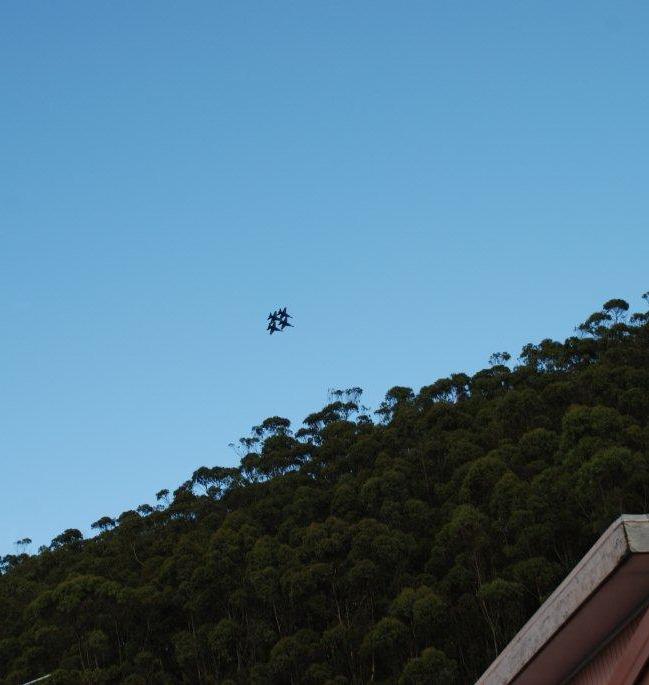
Blue Angels over Mount Sutro Forest

Lulu Carpenter sent me this picture of the Blue Angels flying over Mount Sutro Forest, with the note “I wish I had had my camera out today – they flew right over my head, much lower than they were flying yesterday.”

Here’s a link to last year’s pictures as well.

Posted in Mt Sutro Cloud Forest | Tagged , , | 3 Comments

San Francisco’s Natural Areas: The Many Mistakes in the Draft EIR

We’ve posted several times recently about the San Francisco Natural Areas Program.

In this post, we’d like to talk about the Draft Environmental Impact Report (EIR), open for comments until October 17 31, 2011. [Note: The deadline has been extended, at the request of the Planning Commission.]  It’s meant to examine the Environmental Impact of the “Significant Natural Resources Areas Management Plan” (SNRAMP).

WHAT’S THE SNRAMP?

The SNRAMP is a plan for managing the 1100+ acres of  31 “Natural Areas” in San Fran and Sharp Park in Pacifica. Published in in 2006, it was based on an earlier version from 1995.  The Natural Areas are categorized into three levels of management priorities: MA-1, MA-2, and MA-3, which indicate, roughly, the degree to which they will tolerate the non-native trees and plants that comprise the habitat for wildlife, recreational activities by humans,  off-leash dog play, and in an inverse relation, pesticide use.

Splendid but doomed - trees in Bayview Park being killed by girdling (chopping out a band of bark)

Here’s what the Plan calls for

  • Felling trees. Cutting down nearly 18,500 trees: 3,500 trees in San Francisco — and another 15,000 in Sharp Park in Pacifica.
  • Closing trails. The Plan calls for closing (or “relocating”) around 10 miles of existing trails in use in these areas — and building less than a mile of new trail.
  • Closing dog play areas. The Plan would eliminate the Lake Merced dog play area; reduce the Bernal Hill area by 6 acres and the McLaren Park dog play area by over 8 acres. All told, it would reduce the dog play areas by over 19 acres, or more than 20%. (This comes on top of restrictions imposed in the Golden Gate National Recreation Area.)

It’s also a war against the non-native “invasive” species, by any means possible. (Most trees in San Francisco would fall into that category.) What that amounts to in practice is a goodly amount of pesticide, as we described earlier. And thousands, many thousands, of dead trees.

By law –specifically the California Environmental Quality Act (CEQA) — the SF RPD must examine the impact of that plan on the environment; that’s an Environmental Impact Report (EIR). The Draft EIR has recently been published and the public can comment on it until October 17 31, 2011. [Note:  The deadline has been extended at the request of the Planning Commission.]

A BUNCH OF FOUR ALTERNATIVES

CEQA requires them to consider alternatives to the proposed Plan. In this case, the Draft EIR lays out four of them. These are:

  • The “No Project” Alternative. This would default to the 1995 plan.
  • The “Maximum Restoration” alternative. This would seek to convert all 32 areas to native plants wherever possible (or at least attempt it, whatever the outcome).
  • The “Maximum Recreation” alternative. This would focus on recreation in these areas, to the extent the recreational activities didn’t clash with the “continued existence of native species” and “federally or state-listed sensitive species.”
  • The “Maintenance” Alternative. This would maintain the status quo; support and preserve the native species where they exist, leave the non-native habitat as it is, and preserve the other existing features of the Natural Areas.

It  then evaluates the effect of the Plan on many things, including:

  • land use and planning;
  • aesthetics;
  • cultural and paleontological resources;
  • wind and shadow;
  • recreation;
  • hydrology and water quality;
  • hazards and hazardous materials;
  • agriculture and forest resources;
  • air quality

Unfortunately, this 562-page document (not counting the appendices!) is peppered with mistakes. It’s natural to make mistakes, but when they all tend in one direction – toward minimizing the impact of the proposed Plan or alternatives favored by Native Plant Advocates, one cannot but suspect a bias. These are the ones we’ve discovered thus far; there may be others we haven’t yet found.

MISTAKES IN THE DEIR:
THE ENVIRONMENTALLY SUPERIOR ALTERNATIVE

The biggest and most obvious one is on page 2, the summary — which is all that many people will read. It wrongly states that the “The Maximum Restoration Alternative is the Environmentally Superior Alternative.” This is a mistake (and the City has admitted this). The actual “Environmentally Superior Alternative” is the Maintenance alternative. From the Draft EIR:

The Maximum Recreation and Maintenance Alternatives are the environmentally superior alternatives because they have fewer unmitigated significant impacts than either the proposed project or the Maximum Restoration Alternative…. the Maintenance Alternative has fewer potential environmental effects than the Maximum Recreation Alternative.

First, the Maintenance Alternative would not create new trails, the construction of which could result in impacts to sensitive habitats and other biological resources.

Second, over time the Maximum Recreation Alternative would result in Natural Areas with less native plant and animal habitat and a greater amount of nonnative urban forest coverage. The Maintenance Alternative, on the other hand, would preserve the existing distribution and extent of biological resources, including sensitive habitats. For these reasons, the Maintenance Alternative is the environmentally superior alternative.

OTHER MISTAKES IN THE EIR

  • Read your cites and get them right!  The Draft EIR understates the impact of cutting down thousands of trees on carbon sequestration, and misuses two scientific studies to suggest that grasslands would actually help fight global warming better than forest. (See: Fabricating facts to support native plant restorations.)
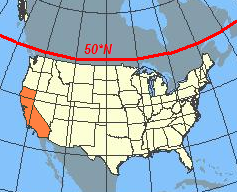
  • It doesn’t snow in San Francisco. The first study quoted suggests that above 50 degrees North latitude, grasslands covered in snow for months reflect more sunlight in winter than forest does, and thus may offset the forests’ carbon sequestration. So which state in the US may be concerned? Only Alaska. Not California — or for that matter, any other state — all of which lie below 50 degrees North latitude.
  • Not adding fertilizer in Natural Areas. The EIR also cites a second study to conclude: “Research studies have concluded that grassland and scrub habitat could act as a significant carbon sink.” But when you go to the cited study — it’s actually about managing pastures and grasslands degraded by overuse to improve carbon sequestration, mainly by adding fertilizer. There’s no plan to add fertilizer (only pesticide!) to Natural Areas. Did the EIR authors even read the studies they cited?
  • Garlon doesn’t degrade quickly. In the discussion of pesticide use, the Draft EIR describes Garlon thusly: It degrades quickly in the environment and has low toxicity to aquatic species (Dow 2009). Umm, no. What Dow actually says in its sheet on Garlon 4 (the version in use) is: “Material is expected to degrade only very slowly (in the environment). Fails to pass OECD/EEC tests for ready biodegradeability.”
  • Garlon is highly toxic to fish and other aquatic species. And as for Garlon having “low toxicity” to fish and other water-critters? Here’s what the manufacturer Dow says in the same Material Safety Data Sheet: “…highly toxic to aquatic organisms…”
  • The Mission Blue Butterfly isn’t at Bayview Park. The Draft EIR mentions the grasslands of Bayview Park as habitat for the famous Mission Blue Butterfly. The butterfly didn’t get the memo: its only San Francisco location is Twin Peaks, where dozens of them have been transferred in from San Bruno mountain (where they occur naturally). ETA: It isn’t in Sharp Park either as mentioned.
  • Before and After are the same pictures. There’s a discussion of scenic resources, which of course are going to be impacted when they cut down thousands of trees. But the pictures of Mt Davidson and of McLaren Park that are supposedly a simulation of the changed conditions are — the very same pictures, with red ovals superimposed. So of course the changes are “unnoticeable.” (The 15,000 missing trees of Sharp Park are not pictured. They’d be noticeable.)
  • The feral geese aren’t “feral.” In the “no project” alternative, there’s a reference to “feral geese.” In fact, they’re wild Canada geese – a protected species — not feral, meaning domesticated animals living free.

TRUTH AND TRUTHINESS

That’s not all. The Draft EIR is full of “huh?” moments.

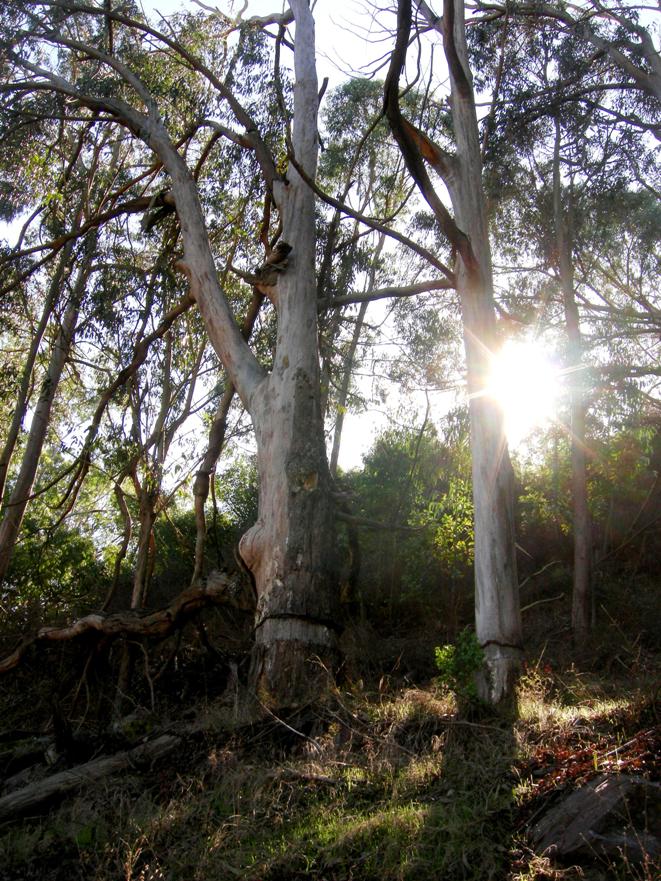
  • It describes trees (mainly eucalyptus) as “invasive” though there’s no evidence that these trees are invasive in San Francisco/ Pacifica (or anywhere). (See: Photographic evidence that eucalypts are not invasive.) Similarly, the scrubland above Laguna Honda is contiguous with eucalyptus forest – but has not been invaded in over a hundred years.
  • It also notes that felling these trees wouldn’t “result in a significant adverse change in the significance of historic landscapes or urban forests.” Really? The eucalyptus forests, particularly on Mount Davidson and the Interior Greenbelt (Mount Sutro) are the last remnants of an extensive forest planted by a significant historic figure, Adolph Sutro. These trees are over a century old.
  • It understates the number of trees to be killed. According to a USDA 2007 study, San Francisco has 669,000 trees — but over half of these are small(under 6 inches in diameter) and most would fall into the “under 15 feet” category that the SF RPD doesn’t count as trees at all and kills at will.
  • It also says the felling of these trees wouldn’t result in significant windthrow risks. This is simply unreasonable. Trees that are not wind-hardened – as is the case of trees growing in dense stands – are exposed to wind by the felling of their neighbors. Since they have grown in protected conditions, they get pushed over by the high winds that sweep the high grounds in many of the hill-top natural areas. The EIR says the increased windthrow would not endanger anyone because it will happen inside parks and forests — but it will mean many more trees will die than the 18,500 already planned.
  • It plans on “urban forests” having 60-200 trees per acre (our estimate based on their formula for basal area).  That’s not forest, that’s a garden with trees in it. (Mount Sutro Forest has some 740 trees per acre. Japan’s Meiji Shrine forest has over 955 trees per acre.)
  • The EIR claims that felled trees will be replace with an equal number of planted trees — even though this is clearly impossible, and this fact is clearly indicated in the DEIR itself – there’s no place where such trees could  be planted even if they intended to do so. (See: Destroying the Trees of San Francisco)
  • It mentions that the trees to be removed would be mainly those that were dead or dying. In fact, the appendices clearly indicate that the tree removal is not about dead or dying trees, it’s about clearing spaces for Native Plants. (See: The Healthy Trees of San Francisco.)
  • The Report dismisses the scenic impact of felling 15000 trees in Sharp Park because the scrubland that is to replace them is “more consistent with the local native landscape.” Scenic?
  • It claims implementing this project would not create a significant hazard through “use of pesticides for vegetation control.”  But it certainly will require increased use of toxic herbicides: Garlon, Milestone, Roundup, and Imazapyr. Especially since part of the plan is to use pesticides on the cut stumps of the felled trees – 18,500 of them. (In fact, it may well be more, since the Plan isn’t considering trees under 15 feet in height – but would still apply toxic herbicides to the trunk of all the small trees it chops down.)

————————————————————-

“Public comments will be accepted from August 31, 2011 to 5:00 p.m. on October 17  31, 2011. [Note:  The deadline has been extended at the request of the Planning Commission.]Written comments should be addressed to Bill Wycko, Environmental Review Officer, San Francisco Planning Department, 1650 Mission Street, Suite 400, San Francisco, CA 94103. Comments received at the public hearing and in writing will be responded to in a Summary of Comments and Responses document.”

“If you have any questions about the environmental review of the proposed project, please call Jessica Range at 415‐575‐9018.”


Posted in deforestation, Environment, eucalyptus, Herbicides, Herbicides: Roundup, Garlon, Natural areas Program | Tagged , , , , , , , | 1 Comment

San Francisco Natural Area’s Pesticide Violations

As we noted in our previous post, the San Francisco Natural Areas Program seems to be using increasing amounts of toxic pesticides. From time to time, we’ve posted information here about pesticide use in the Natural Areas Program (NAP) lands.  Roundup, Garlon, Imazapyr in Glen Canyon, at Pine Lake, on Twin Peaks, Mt Davidson, in the Interior Greenbelt — usually with a photograph. (Search this site on any pesticide name to see other relevant posts.)

What our readers have pointed out to us is that many of these violate the rules of the San Francisco Department of the Environment (SF DoE). We really appreciate SF DoE regulating toxic pesticides. They’re our second line of defense, when the Environmental Protection Agency seems all too ready to approve first and question later (or not question later). But they can only be effective if their rules stick.

What do we mean, violations? Well, here are a few, all from 2009 and 2010. Were there others? We don’t know.

A BUNCH OF VIOLATIONS

Missing dates on notices. The signs for pesticide spraying are meant to warn people — both the NAP staff and the general public with the kids and pets — that toxic chemicals are in use in an area. It’s pretty well-designed; it requires the dates the application is planned, how it will be applied, and then when it’s been used and when it will be safe to go back in there. But as with every precaution from seat-belts to poison symbols, it only works if it’s used.  From the time we started collecting notices (pictures, not the actual notices), we often found key data missing: the date and time of the actual application. That means it’s never clear when (or whether) the pesticides were used and whether it’s safe to re-enter.

Using pesticides before they’re approved. In 2009, when we published a photograph someone sent us of  Imazapyr usage at Pine Lake in Stern Grove, other readers were surprised. How come? SF DoE hadn’t approved it for use, had it?

They hadn’t.

It’s been approved only in 2011, as a Tier II pesticide.

Using pesticides where they’re not approved. In November 2010, we saw a notice that said they were spraying Aquamaster (glyphosate, same active ingredient as Roundup) “near shoreline” of Lake Merced. The target plant was “ludwigia – aquatic weed.” Also known as water-primrose, this grows in the water and presumably that’s what they were after. Except… Lake Merced is red-legged frog habitat. Use there is restricted: “Note prohibition on use within buffer zone (generally 60 feet) around water bodies in red-legged frog habitat.” (Glyphosate is death on frogs.) This was a lot less than 60 feet.

Spraying when they shouldn’t be spraying. According to the SF DoE, here’s how Roundup should be used: “Spot application of areas inaccessible or too dangerous for hand methods, right of ways, utility access, or fire prevention…OK for renovations but
must put in place weed prevention measures. Note prohibition on use within
buffer zone (generally 60 feet) around water bodies in red-legged frog habitat.” But according to all the notices (and the records) they’ve been using a backpack sprayer.

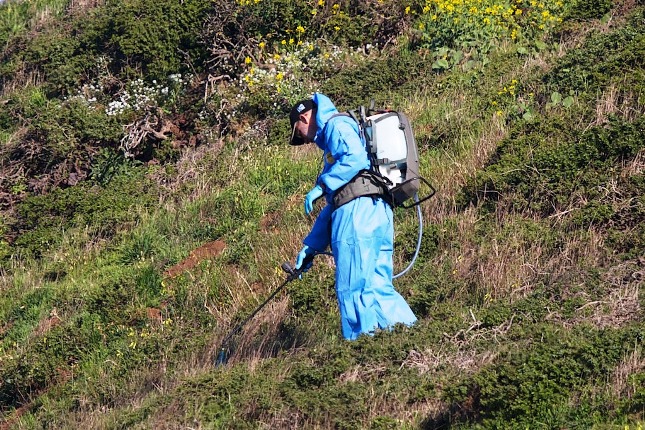
Spraying Garlon without a respirator. The signs said Garlon.  The SF DoE regs said that this Tier I pesticide was for “Use only for targeted treatments of high profile or highly invasive exotics via dabbing or injection. May use for targeted spraying only when dabbing or injection are not feasible, and only with use of a respirator. HIGH PRIORITY TO FIND ALTERNATIVE.” The person spraying wore a blue “space-suit” — but no respirator. (Don’t know who it was, whether a Parks employee or someone from contractor Shelterbelt. Whoever, please be careful. The regs are there for a reason.)

Poorly maintained data. Pesticide use is recorded, and again the records are pretty specific. The serial number of the use, and the date. The chemical used, its trade name and chemical name and its EPA number. Where it’s been applied, and what it’s targeting. Who applied it. Analyzing these records would give a pretty good idea of who’s using what, where and why. But… the records aren’t complete, or at least they don’t appear to be. We’ve found notices in the field with no corresponding database entry.

IMPLICATIONS FOR THE DEIR

We understand how these violations occur. We don’t attribute adverse motives to NAP; they’re not going through the books thinking, which rule shall we break today? Remembering all the restrictions, maintaining records and filling in signs is tedious, and it’s easy to forget in the press of work. Even NASA makes mistakes.

Still, the objective of the rules is to keep us all safer and reduce the use of toxins as far as possible. With good reason, we don’t think the NAP is able to comply.

As readers will be aware, the Draft Environmental Impact Report (DEIR) for the San Francisco Natural Areas Management Plan is now open for public comment.  What the DEIR says is: “Pesticide and herbicide use in the Natural Areas would be in accordance with the SFRPD’s Integrated Pest Management (IPM) Program and San Francisco’s Integrated Pest Management Ordinance...”

Seriously? Can they even do it?

——————————————————————————

[Edited to add:

For readers who are interested in commenting on the DEIR:

“A public hearing on this Draft EIR and other matters has been scheduled by the City Planning Commission for October 6, 2011, in Room 400, City Hall, 1 Dr. Carlton B. Goodlett Place, beginning at 1:30 p.m. or later. (Call 558‐6422 the week of the hearing for a recorded message giving a more specific time.)”

Public comments will be accepted from August 31, 2011 to 5:00 p.m. on October 17  31, 2011. [Please note, the deadline has been extended.] Written comments should be addressed to Bill Wycko, Environmental Review Officer, San Francisco Planning Department, 1650 Mission Street, Suite 400, San Francisco, CA 94103. Comments received at the public hearing and in writing will be responded to in a Summary of Comments and Responses document.”

“If you have any questions about the environmental review of the proposed project, please call Jessica Range at 415‐575‐9018.”]

Posted in Herbicides, Herbicides: Roundup, Garlon, nativism, Natural areas Program | Tagged , , , , , , , , | 4 Comments

Natural Areas Program’s Pesticides: Toxic and Toxic-er

It’s no surprise that people are beginning to associate San Francisco’s Natural Areas Program with pesticides. It’s been using them (if the city’s records are accurate) at an increasing rate.

  • In 2009, it applied Garlon 16 times; in 2010, it was 36 times.
  • It applied Roundup (or Aquamaster, also glyphosate) only 7 times in 2009, but 42 times in 2010.
  • [Edited to Add, January 2013: Usage continues to increase. In 2012,pesticide use was the highest by any measure.]

The Draft Environmental Impact Report (DEIR) on the SF Natural Areas Program is rather coy about pesticides. It doesn’t say how much it’ll use, just that it will follow all the rules when using them. (They actually have a poor track record there, but we’ll go into that in another post. [Edited to Add: We did.]) Today, we want to talk about the pesticides on their list: Roundup or Aquamaster (glyphosate); Garlon (triclopyr); Polaris (imazapyr); Milestone (aminopyralid).

SF’s Dept of the Environment classifies all of these as Tier I (Most Hazardous) or Tier II (Hazardous). There’s no mention of using any Tier III (Least Hazardous) chemicals.

ROUNDUP or AQUAMASTER (Glyphosate)

We’ve talked before of Roundup, a Tier II pesticide. We hope that in view of the new research that has been surfacing, SF’s DoE will revisit that classification and consider if it deserves a Tier I rating.

  • heart breaking

    It’s been associated with birth-defects, especially around the head, brain and neural tube — defects like microcephaly (tiny head); microphthalmia (tiny undeveloped eyes); impairment of hindbrain development; cyclopia (also called cyclocephaly – a single eye in the middle of the forehead). [Edited to Add (Jan 2013): SF DOE reviewed the new research and decided that since the research was in vitro (mostly on cells in a lab) rather than in vivo (on actual animals), and it used high doses, it was unconvincing. Given the costs of live trials, it may be a while before we see any that are not sponsored or paid for by interested parties. However, the EPA is studying whether it’s an endocrine disrupter.]

  • [Edited to Add (April 2015): The World Health Organization has determined glyphosate to be “probably carcinogenic” to humans, specifically associating it with non-Hodgkin lymphoma, a cancer originating in the lymph nodes.]
  • Research indicates it kills beneficial soil fungi while allowing dangerous ones to grow.
  • It binds to the soil, and acts as a “chelating agent” – trapping elements like magnesium that plants need to grow and thus impoverishing the soil.
  • It’s very dangerous to frogs and other amphibians, and quite dangerous to fish.

GARLON (Triclopyr)

Classified as Tier I, Garlon is even more hazardous than Roundup. In 2010, NAP used this pesticide 36 times (sometimes in combination with Roundup, which it has said it will no longer do). We’ve written about Garlon before, Garlon in our Watershed — which has more details — and many times since then.  In brief, these are the main issues:

  • Garlon “causes severe birth defects in rats at relatively low levels of exposure.” Baby rats were born with brains outside their skulls, or no eyelids. Exposed adult females rats also had more failed pregnancies.
  • Rat and dog studies showed damage to the kidneys, the liver, and the blood.
  • About 1-2% of Garlon falling on human skin is absorbed within a day. For rodents, its absorbed twelve times as fast. It’s unclear what happens to predators such as hawks that eat the affected rodents.
  • Dogs  may be particularly vulnerable; their kidneys may not be able to handle Garlon as well as rats or humans.  Dow Chemical objected when the Environmental Protection agency noted decreased red-dye excretion as an adverse effect, so now it’s just listed as an “effect.”
  • It very probably alters soil biology. “Garlon 4 can inhibit growth in the mycorrhizal fungi…” ( soil funguses that help plant nutrition.)
  • It’s particularly dangerous to aquatic creatures: fish (particularly salmon); invertebrates; and aquatic plants.
  • Garlon can persist in dead vegetation for up to two years.

The DEIR has said that the SF NAP’s phasing out Garlon. We have some doubts; its tree-felling program will be futile without Garlon to prevent re-sprouts.

POLARIS, HABITAT (Imazapyr)

This is a very new pesticide, and not much is known about it — except that it’s very persistent. SF’s DoE has recently approved it for use as a Tier II hazard. It not only doesn’t degrade, some plants excrete it through their roots so it travels through the environment. We’ve written about this one, too, when NAP recently started using it on Twin Peaks and Glen Canyon. (Actually, NAP had started using it prior to SF DoE’s approval , in Stern Grove and also at Lake Merced in 2009 and some unspecified NAP area in 2008.)

About its impact on people, we wrote: “it can cause irreversible damage to the eyes, and irritate the skin and mucosa. As early as 1996, the Journal of Pesticide Reform noted that a major breakdown product  is quinolic acid, which is “irritating to eyes, the respiratory system and skin. It is also a neurotoxin, causing nerve lesions and symptoms similar to Huntington’s disease.”

It’s prohibited in the European Union countries, since 2002; and in Norway since December 2001.

MILESTONE (Aminopyralid)

Milestone is a Dow product that kills broadleaf plants while ignoring most grasses. While the DEIR lists this as a chemical used by the NAP, they actually used Milestone very little (twice in 2010). Fortunately. SF DoE classifies it as Tier I, Most Hazardous.

[Edited to Add, March 2013: SF DoE changed the classification to Tier II. And NAP is using it much more frequently – see our article on NAP pesticide usage from 2008-2012 ]

This is even more problematically persistent than Imazapyr; a computer search yielded warnings of poisoned compost.

What?

It seems that this chemical is so persistent that if it’s sprayed on plants, and animals eat those plants, it still doesn’t break down. They excrete the stuff in their droppings. If those are composted — it still doesn’t break down the chemical. So now the compost’s got weedkiller in it, and it doesn’t nourish the plants fertilized with the compost, it kills them.

The manufacturer sees this as  a benefit. “Because of its residual activity, control can last all season long, or into the season after application on certain weed species,” says the Dow AgroSciences FAQ sheet.

Nevertheless, after an outcry and problems, Dow AgroSciences has stopped selling Milestone in the UK until it’s figured out. [Edited to Add, July 2012: It’s also prohibited for use in New York.] [Edited to Add, March 2013: The UK has permitted its sale again. New York hasn’t.]

Note to NAP and SFRPD: Don’t put clippings treated with Milestone in the green bin!

PESTICIDE CONSPIRACY THEORIES

When we first started researching pesticide use in “Natural Areas” (and shocking a lot of people who’d assumed “Natural” meant natural), conspiracy theories arose: The chemicals companies were subverting the decision-makers; Pesticides were being portrayed as ecological, and the marketing machine was convincing them; Maybe there were even payoffs!

We think the explanation is much simpler: Those in charge of the Natural Areas are being asked to do the impossible. They’re given a large area, (ETA: it’s as big as Golden Gate Park but in 32 separate locations) in the middle of a city where conditions don’t even approximate those of the pre-industrial era, and asked to return it to a specific moment in time.

It doesn’t want to go.

WHY NATURAL AREAS FIGHT BACK

Someone described the effort to “restore” the “Natural Areas” to “Native plants” as a constant battle. It is, and here’s why:

  • Stopping natural succession. Some areas are harder than others. Grasslands want to grow shrubs, native or not. Then, in pre-industrial San Francisco, along would come grazing browsing animals, or lightning strikes, or a landslide or two, and the shrubs would lose and the grass would win. Preserving grasslands requires killing the shrubs, and in the absence of animals and fires and landslides, it’s pesticides. Repeatedly.
  • Battling successful plants. And then there are the plants that do want to grow there, that grow there naturally (even if, like many San Franciscans, they’re not from here). These we call invasive, and want to get rid of them. That’s more pesticides. And since the plants are good at what they do, they have to be strong pesticides. Repeatedly.
  • “Invaders” compete with each other. Even if the pesticides clear an area of one kind of “invasive” plant, unless the space is intensively gardened, it’ll be taken over by other “invaders.” More pesticides.

The bison in the room (it’s native, unlike the elephant) is this: Contrary to the belief that Native Plants are so adapted to a particular place that “restorations” can be achieved merely by eradicating unwanted plants — Native Plant gardens need the same kind of maintenance and care as any garden.

Without the Sutro Stewards’ volunteers working there every month or so, the Native Garden on top of Mount Sutro would revert to its natural state: a mix of native and introduced plants. (No pesticides are used in that area, or indeed anywhere on UCSF’s Mount Sutro space. It may be the last pesticide-free wild area in San Francisco.)

Is the Natural Areas Program, as it’s currently managed, worth it? We think not, because of:

  • the ongoing and growing need for toxic herbicides;
  • the destruction of habitat for insects, birds and animals that rely on it (and this includes native species, most of which have adapted to introduced plants);
  • we think it’s an expensive misdirected effort in terms of time and treasure.

It makes sense to define small areas as Native Gardens, focus on those, and make them succeed. That can be done — as the Native Garden on Mount Sutro proves — without toxic chemicals.

Posted in Environment, Herbicides, Herbicides: Roundup, Garlon, Mount Sutro Stewards, nativism, Natural areas Program | Tagged , , , , , , , , | 18 Comments

“Natural Areas Program”: Destroying the Trees of San Francisco

We re-publish this recent article with permission (and minor edits) from Death of a Million Trees. Plans for managing San Francisco’s Natural Areas — currently the subject of a Draft Environmental Impact Report — calls for cutting down thousands of trees in the city.

——————————————————————————————

DESTROYING THE TREES OF SAN FRANCISCO

The San Francisco Natural Areas Program (NAP) plans to destroy thousands of trees in San Francisco’s parks.  The Draft Environmental Impact Report (EIR) for NAP’s destructive plan reaches the bizarre conclusion that removing thousands of trees will have no significant impact on the environment.   This conclusion is based on several fictional premises.

In this post we will examine one of those premises:   that all the trees that are removed will be replaced within the natural areas by an equal number of trees that are native to San Francisco.

The EIR supports this fictional premise by falsely reducing the number of trees that will be removed by:

  • Not counting trees less than 15 feet tall, despite the fact that the US Forest Service survey of San Francisco’s urban forest reports that the trunks of most (51.4%) trees in San Francisco are less than 6 inches in diameter at breast height, the functional equivalent of trees less than 15 feet tall.
  • Not counting the hundreds of trees that were destroyed before the approval of the NAP management plan at Pine Lake, Lake Merced, Bayview Hill, Glen Canyon parks, etc.
  • Not counting tree removals proposed by the “Maximum Restoration Alternative” which the EIR says [ETA: in its Summary, the only section most people will read] is the “Environmentally Superior Alternative.”
  • [Edited to Add: This statement on Page 2 of the EIR is a mistake, which the SF RPD has acknowledged. In fact, on page 525, two alternatives are called “Environmentally Superior: “The Maximum Recreation and the Maintenance Alternatives are the environmentally superior alternatives because they have fewer unmitigated significant impacts than either the proposed project or the Maximum Restoration Alternative.”  So in fact the option that has the least interference, and requires the least investment is also environmentally superior — a fact conveniently omitted on Page 2.]

However, even artificially reducing the number of tree removals does not make “one-to-one” replacement a realistic goal. It just cannot be done.

THE NATURAL HISTORY OF TREES IN SAN FRANCISCO

The primary reason why we know that it will not be possible to grow thousands more native trees in the natural areas in San Francisco is that there were few native trees in San Francisco before non-native trees were planted by European settlers in the late 19th century.  San Francisco’s “Urban Forest Plan” which was officially adopted by the Urban Forestry Council in 2006 and approved by the Board of Supervisors describes the origins of San Francisco’s urban forest as follows:

“No forest existed prior to the European settlement of the city and the photographs and written records from that time illustrate a lack of trees…Towards the Pacific Ocean, one saw vast dunes of sand, moving under the constant wind.  While there were oaks and willows along creeks, San Francisco’s urban forest had little or nothing in the way of native tree resources.  The City’s urban forest arose from a brief but intense period of afforestation, which created forests on sand without tree cover.”

San Francisco in 1806 as depicted by artist with von Langsdorff expedition. Bancroft Library

THE HORTICULTURAL REALITY 

More importantly, the reality is that even if we want to plant more native trees in San Francisco, they will not grow in most places in San Francisco.  We know that for several reasons:

  • There are few native trees in San Francisco now.  According to the US Forest Service survey of San Francisco’s urban forest only two species of tree native to San Francisco were found in sufficient numbers to be counted in the 194 plots they surveyed:  Coast live oak was reported as .1% (one-tenth of one percent) and California bay laurel 2.1% of the total tree population of 669,000 trees.
  • The city of San Francisco maintains an official list of recommended species of trees for use by the Friends of the Urban Forest and the Department of Public Works.  The most recent list categorizes 27 species of trees as “Species that perform well in many locations in San Francisco.”  There is not a single native tree in that category.  Thirty-six tree species are categorized as “Species that perform well in certain locations with special considerations as noted.”  Only one of these 36 species is native to San Francisco, the Coast live oak and it’s “special considerations” are described as “uneven performer, prefers heat, wind protection, good drainage.”  The third category is “Species that need further evaluation.”  Only one (Holly leaf cherry) of the 22 species in that category is native to San Francisco.
  • Finally, where native trees have been planted by NAP to placate neighbors who objected to the removal of the trees in their neighborhood parks, the trees did not survive.

WILL SF NAP PLANT TREES THAT WON’T SURVIVE?

Given what we know about the horticultural requirements of the trees that are native to San Francisco, what are we to think of the claim that all non-native trees removed by the Natural Areas Program will be replaced by native trees?  Is there any truth to this claim?  Will native trees be planted that won’t survive?  Or will they just not plant the trees that they claim will be planted?

We turn to the management plan for the Natural Areas Program for the answer to this question.  In fact, the management plan proves that NAP has no intention of planting replacement trees for the thousands of trees they intend to destroy.  The “Urban Forestry Statements” in Appendix F of the management plan contain the long-term plans for the natural areas in which trees will be destroyed.  All but one of these specific plans is some variation of “conversion of some areas of forest to scrub and grasslands.”  The exception is Corona Heights for which the plans are “converted gradually to oak woodland.”  The Corona Heights natural area is 2.4 acres, making it physically impossible to plant thousands of oaks in that location.

NAP plans to destroy 1,600 trees over 15 feet tall on Mt. Davidson and more if the EIR is approved.

PUTTING THE MAGNITUDE OF THE PROPOSED TREE CUTTING INTO PERSPECTIVE

It isn’t easy to confront public policies.  We all have better things to do.  So, before we leave this issue, let’s consider the magnitude of the loss of thousands of trees in San Francisco.  We turn to the survey of San Francisco’s urban forest by the US Forest Service to put the proposed tree removals into perspective:

  • There are only 669,000 trees in San Francisco, with a tree cover of only 11.9% of the land.  Of the 14 cities in the US reported by this survey, only Newark, New Jersey has a smaller tree canopy, covering 11.5% of the land.
  • Most of these trees are small:  Over half (51.4%) have trunk diameters of less than 6” at breast height.
  • The highest densities of trees are found in San Francisco’s open spaces, such as parks.
  • The trees and shrubs of San Francisco remove 260 tons of air pollutants (CO, NO₂ , O₃, PM₁₀, SO₂) per year
  • San Francisco’s trees now store 196,000 metric tons of carbon.  Stored carbon is released into the atmosphere when trees are destroyed and as they decay as chips or logs on the ground.
  • In San Francisco, the blue gum eucalyptus stores and sequesters the most carbon (approximately 24.4% of the total accumulated carbon stored and 26.4% of annual rate of carbon sequestered).  Most of the trees that have been destroyed in the past and will be destroyed in the future by NAP are blue gum eucalyptus.

If you care about the trees of San Francisco, please keep in mind that the public will have an opportunity to comment on the environmental impact report on the proposal to remove thousands of trees in the city’s parks.  There will be a public hearing on October 6, 2011, and the deadline for submitting a written comment is October 17  31, 2011. [Note: The deadline has been extended.] Details about how to comment are available here.

Century-old forest on Mt Davidson: Doomed?

Posted in deforestation, Environment, eucalyptus, nativism, Natural areas Program | Tagged , , , , , , | 7 Comments

Why San Francisco’s Natural Areas Are — Unnatural

WHEN I first heard about San Francisco’s Natural Areas Program (SF NAP) some years ago, I was charmed. Over 1000 acres of city-owned land would be left to Nature, more wild and free than the orderly, gardened lawns and playgrounds (which I also appreciated, in a different way). Kudos to the San Francisco Recreation and Parks Department (SFRPD) — which owns the SF NAP — was my reaction.

These would be spaces, I thought, where plants and animals and people could interact naturally. Birds and animals could safely breed in tangled thickets; so could bees and butterflies and other insects. They’d provide enough cover for birds and animals to hide from dogs, cats, hawks, coyotes, raccoons — and people. These spaces would be free of the toxic chemicals used in managing parks. Dogs could be allowed to romp through areas wild enough to tolerate disturbance. The only intervention, I assumed, would be to maintain some degree of safety on trails that animals and people would blaze through these areas.

If like me, you thought that Natural Areas were going to be, well, natural… then like me, you were mistaken.

NATURAL VS “NATIVE”

San Francisco’s “Natural Areas” program is really about is Native Plants, most of which no longer grow in these places naturally. These plants grew (or may have grown) in these 46.9 square miles some 300 years ago. Some are still there. Others, even though common elsewhere, aren’t found in the city any more. Instead, other plants grow there, adding to the biodiversity of the area. According to Peter Kareiva of the Nature Conservancy, there are 25% more species in California than there were before “non-native” plants got here.

What we’re actually getting, then, is Native Plant Gardens, 32 of them. Trying to push these spaces back in time means they must be managed and maintained, because San Francisco now is a different place and a different ecology from the windblown hills and sand-dunes of its pre-colonial past.

What does this management and maintenance imply?

POURING ON PESTICIDES

Since there’s a lot of area, and a lot of plants, this means a lot of pesticides. According to the records, Natural Areas had 69 applications of pesticides in 2010, most of them Tier I and Tier II pesticides like Garlon and Roundup. (San Francisco groups permissible pesticides into three tiers, with Tier I being the most dangerous and Tier III the least. The SF NAP hasn’t used Tier III pesticides, they’re all Tier I or II.)

Some — including Native Plant doyen Jake Sigg — have argued that one or two applications in a decade are all that’s needed, and are thus justified. That hasn’t been our experience. Two nearby Native Areas — Twin Peaks and Glen Canyon — have been sprayed many times annually for many years. According to their communications with some concerned neighbors, the SF NAP does not expect to stop.

MUSEUM-IFICATION

Some years ago, we ran an article on museum-ification. This is the fate of many of these “natural” areas: they come with more, not fewer, restrictions than gardens and parks. Many of the paths animals and people made naturally, called “social trails” are blocked. There are formal trails, and people must stay on them. They are discouraged from actually interacting with these environments, except as gardening or trail-building volunteers.

Some 86% of the city’s dog-play off-leash areas are in areas controlled by the SF NAP. They plan to close several of these. (This comes on the heels of a plan to ban all dogs from the Golden Gate National Recreation Area.)

TREES BEING CUT AND HABITAT DESTROYED

Trees are being chopped down.  San Francisco had some wonderful eucalyptus forests, many of them over a century old with a complex habitat and dense understory. Most of these are already gone.

The eucalyptus trees — defined as “invasive trees” despite the evidence that they are not invading anything — are non grata. So too the Monterey pine and the Monterey cypress; those are native to distant Monterey, all the way down the peninsula.  Many trees have already been felled, and many thousands more are doomed. (That’s only counting those over 15 feet tall; the SFNAP counts smaller trees as “saplings” or “seedlings” and cuts them at will.)

The plan, for “urban forests” is to cut down trees until they’re down to a “basal area” of 200-600 feet per acre. This gives an estimated 60-200 trees per acre. (By comparison, Sutro Forest averages 740 trees per acre.)

In addition, the plan calls for removing blackberry thickets, one of the richest and safest habitats for birds and animals. It calls for removing fennel, another tall and dense habitat plant which, just incidentally, is the nursery plant for the native Anise Swallowtail butterfly. It calls for removing vines from the trees, all of which provide some of the complex habitat small birds need.

In fact, it seems to call for removing anything that grows lush and dense and useful to birds and animals. The result wouldn’t be a forest (urban or otherwise);  it would be a garden with some trees in it.

WHAT WE SUPPORT…

We’d like to clarify:

We are for preservation of existing habitats and ecosystems. We think places like the coastal scrub area on the slope above Laguna Honda Reservoir, (which has not been invaded by the contiguous eucalyptus forest!) deserve protection. This area is, incidentally, owned by the SF Water Department, not the SF Recreation and Parks Department. It’s visible from the road, but is not publicly accessible.

We’re fine with planting scrappy semi-industrialized areas like Heron’s Head Park into Native Plant gardens; that area had a recent win when Clapper Rails nested there and successfully produced chicks.

…AND WHAT WE DON’T

  • We object to converting parks devoted to other uses into such Native Gardens by imposing numerous restrictions.
  • We object to habitat destruction; birds, insects and animals all use these “non-native’ habitats.
  • We object to felling thousands of trees.
  • Most of all, we object to the use of toxic pesticides in areas that should, naturally, be free of chemicals.

WHERE WE ARE

The Draft Environmental Impact Report (DEIR) for San Francisco’s Natural Area’s Program has recently been opened for public comment. It has a “proposed project” — with tree-death and pesticides — as well as four other options. (Our post here, republished from Death of a Million Trees, examines some of the issues. We will be posting more on the DEIR soon.)

Posted in Environment, Natural areas Program | Tagged , , , , , , , , | 6 Comments

Bird-safe Buildings for San Francisco

Bird-killers.

More dangerous than wind-farms, more insidious than cats… it’s windows. (The glass ones, not the thing produced by Microsoft.) Birds can’t see normal glass, and crash into it. Either they die, or they become easy prey.

San Francisco, like Chicago and Toronto, is trying to introduce legislation to make glass buildings safer for birds.  Here’s a quote from the Planning Department website:

The newly adopted Standards for Bird-Safe Buildings [Note: this is a PDF file] explains the documented risks that structures present to birds. Over thirty years of research has proven the risk to be “biologically significant” for certain bird species. Recent studies have determined that annual bird fatalities in North America from window collisions may be as high as 1 billion birds per year or 1-5% of all birds. While the facts are staggering, the solutions are within reach. The majority of these deaths are foreseeable and avoidable. The document summarizes proven successful remedies such as window treatments, lighting design, and lighting operation. The document proposes a three-pronged approach to the problem:

  1. establishment of requirements for the most hazardous conditions; ( page 28 of Standards for Bird-Safe Buildings )
  2. use of an educational checklist to educate project sponsors and their future tenants on potential hazards; and ( page 38 of Standards for Bird-Safe Buildings )
  3. creation and expansion of voluntary programs to encourage more bird-safe practices including acknowledging those who pursue certification through a proposed new program for “bird-safe building” recognition. ( page 33 of Standards for Bird-Safe Buildings )

If you’re living in San Francisco, please write to your Supervisor to support this.

[Edited to Add on 19 Sept 2011: Even Fox has an item about it, illustrated in a fair and balanced way with a graphic … from the poster for Hitchcock’s “Birds.”]

SAVING CRASHED BIRDS

And meanwhile: If you find a crashed bird and it’s not dead — try to rescue it by providing a safe quiet place and some food and water. There’s a heart-warming story here on Walter Kitundu’s marvelous bird blog, wherein he saves a young Western tanager. It has some charming photographs.


Posted in Environment | Tagged , | Comments Off on Bird-safe Buildings for San Francisco

San Francisco’s Natural Areas Program…Where’s It Going?

This article has been reprinted with permission from Death of a Million Trees, a blog dedicated to preventing unnecessary tree-felling.  (The emphasis is ours, as are minor edits.) [Edited to Add: MillionTrees updated this post. We have copied over the same note into the article.] [ETA 2: The Deadline for comments has been extended to October 31, 2011.]

————————————————————————-

Fifteen years after San Francisco’s Natural Areas Program (NAP) began operation and 5 years after its management plan was approved, the Draft Environmental Impact Review (EIR) has finally been published [the details of the Management Plan are available on the sfgov website here].  We will briefly summarize the history of NAP, describe the plans as they were approved in 2006, and conclude with a comparison between those plans and the proposal in the EIR to aggressively expand NAP.

NATURAL AREAS PROGRAM – THE MANAGEMENT PLAN

In 1995 the Recreation and Park Commission approved the designation of 31“natural areas” in parks managed by the city of San Francisco. This designation committed 25% of the city’s park acreage in San Francisco, 33% including the city of Pacifica to the Natural Areas Program.

Most park visitors were unaware of this designation until 5 years later when they finally had access to a draft of the management plan after a lengthy battle to make it available.  At that point, many park visitors could see where the Natural Areas Program was headed and many of them reacted negatively to the prospect of the destruction of non-native trees and restrictions on recreational access in popular, heavily visited parks.

The result of the long debate with the public was a revised management plan that separated the natural areas into three “management areas.”  These management areas (MAs) set priorities for the restoration of parkland to native plants:  MA-1 was the highest priority, MA-2 the second priority, and MA-3 the lowest priority.  The appeal of these priorities to critics of NAP was the commitment that there would be no tree removals in the MA-3 areas and that no legally protected species would be planted or reintroduced there, which might require further access restrictions in the future.  Forty-two percent of the total 1,080 acres of natural areas was designated as MA-3.

The management plan was approved in 2006, after two days of public hearings at which about 200 public comments were heard by the Recreation and Park Commission.  [The whole thing is available as a huge 367 MB ZIP file here, or as links to individual parks.] Supporters of NAP outnumbered critics of the program.  The main message of the critics of the program was that the acreage committed to natural areas should be reduced to places in which native plants existed, which would not include acreage designated MA-3.

There were two trivial caveats to the approval of the program:  defining the circumstances under which cats could be removed from the natural areas and specifying that tree removals must be done by the Urban Forestry Division of the Recreation and Park Department (RPD).  These are some of the main features of the approved management plan:

  •  Tree removals:   18,500 trees over 15 feet tall were designated for removal in MA-1  and   MA-2 areas. In addition, non-native trees under 15 feet tall would be removed in these areas, but were not quantified because the plan did not define them as “trees”
  •  Trails.  10.3 miles of trails were designated for closure in these areas.  That represented 26% of all trails in the natural areas.
  •  Dog Play Areas are those areas in parks that have been officially designated for off-leash recreation.  The NAP management plan identified several dog play areas that would be monitored for possible closure in the future if necessary to protect native plants.  Those dog play areas were in Bernal Hill, McLaren and Lake Merced parks.
  • Golf Course at Sharp Park will be reconfigured to accommodate populations of two endangered species.

ENVIRONMENTAL IMPACT REVIEW: WHAT’S CHANGED

Five years after the approval of the management plan, the Environmental Impact Review (EIR) has finally been published.  The EIR identifies 4 alternatives to move forward with the implementation of the plan. The EIR identifies the “Maximum Restoration Alternative” as the “Environmentally Superior Alternative” described as follows:

“This alternative seeks to restore native habitat and convert nonnative habitat to native habitat wherever possible throughout the Natural Areas, including all management areas.”

[ETA:  This article has been updated by a more recent post which reports that a mistake has been found in the Draft Environmental Impact Report (DEIR):  The “Maximum Restoration Alternative” is not the “Environmentally Superior Alternative” as the DEIR claims on page 2.  The “Maintenance Alternative” is the “Environmentally Superior Alternative” as the DEIR says on page 526.  The mistake on page 2 has been reported to the Planning Department.  The Planning Department has acknowledged the error on page 2 and has made a written commitment to correct the error in the Final Environmental Impact Report.  Unfortunately, this correction will not be made until the public comment period is over.]

In other words, the preferred alternative would do away with the priorities identified in the management plan and treat all three management areas the same.  These are the specific implications of this proposal as described by the EIR:

  •  Trees.  Non-native trees would also be removed in the MA-3 areas.  The number of trees over 15 feet tall that will be removed will exceed 18,500, but the EIR does not quantify how many trees will be removed.
  • Trails.  More trails would be closed in the MA-1 and MA-2 areas, but the EIR is not specific about how many miles of trail will be closed.
  • Dog Play Areas.  All dog play areas in MA-1 and MA-2 areas would be closed.  This will close the dog play areas in Buena Vista and Golden Gate (Southeast) parks and what little remained of McLaren (Shelley Loop) and Bernal Hill after the closures mandated by the management plan.  Dog play areas in MA-3 areas will be monitored and closed in the future if necessary to protect native plants.  The EIR predicts that all of these closures in addition to the anticipated closures of GGNRA properties to off-leash dogs will result in heavier usage of the dog play areas that remain.
  • Golf Course at Sharp Park would be further reduced by expanded habitat for endangered species.
  • Other access restrictions.  Legally protected species will be introduced in MA-3 areas, which may require further restrictions on access in the future.

The other alternatives identified in the EIR are:

  1.   “No Project Alternative – Under this alternative, the SFRPD would continue with the management activities authorized under the 1995 management plan.”  This alternative will close the dog play areas that were monitored since the management plan was approved in 2006: the Mesa at Lake Merced, portions of Bernal Hill and McLaren (Shelley Loop).
  2. Maximum Recreation Alternative – This alternative seeks to restore and improve recreational access to the Natural Areas wherever it does not interfere with the continued existence of native species and federally or state-listed sensitive species.”
  3. Maintenance Alternative – This alternative seeks to maintain the current distribution of native and nonnative habitat and species throughout the Natural Areas.  Under this alternative there would be no conversion of nonnative habitat to native habitat; other features of the Natural Areas would be retained.”

REWARDING FAILURE

Park visitors who have been watching the restoration efforts of the Natural Areas Program for the past 15 years might be surprised that NAP apparently wishes to expand its restoration efforts.  Repeated clearing of non-native plants and planting of native plants have been spectacularly unsuccessful.  Here’s a photo history of the effort at Pine Lake in Stern Grove:
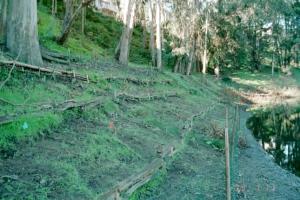
One of several clearing and plantings of south shore of Pine Lake, 2003

Pine Lake, South Shore, 2011
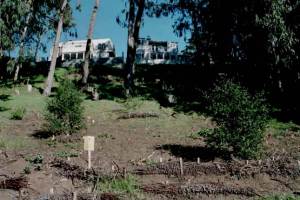
North shore of Pine Lake, 2003
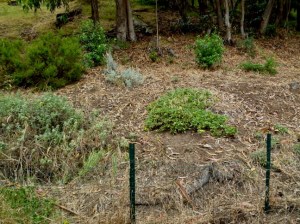
The results, north shore of Pine Lake, 2011

If NAP has been unable to successfully restore 58% of acres of natural areas (MA-1 and MA-2) they have been actively working on for the past 15 years, why would they want to expand their empire by adding MA-3 acreage to their agenda, committing them to actively restoring all 1,080 acres of natural areas?  Aren’t they biting off more than they can chew?

Where will the money come from to fund this expanded effort?

Although NAP and its many supporters believe that this lack of success is because they haven’t been adequately funded, the NAP staff is one of the only divisions in the Recreation and Park Department that hasn’t been cut in the past 10 years.  While other gardeners have been laid off, the NAP staff has remained the same size.  How many gardeners will it take to expand their restoration efforts to the MA-3 areas as the EIR proposes?  Remember that the MA-3 areas are 42% of the total NAP acreage.  Will NAP be given a 42% increase in their staff?  One wonders where the money for such an increase in staff would be taken from.

How much more herbicide will be used in this expanded effort?

Will a 42% increase in actively management NAP acreage require more herbicide use?  The Natural Areas Program applied herbicides to the so-called “natural areas” 69 times in 2010. Most of those applications were of the most toxic herbicide (Garlon) for which the Natural Areas Program was granted exceptional permission to use by the Department of the Environment.  How much more herbicide must be used by NAP if they actively manage the MA-3 areas?  The EIR is curiously silent on this question.

PUBLIC COMMENTS

The public will have two opportunities to comment on the EIR and its “preferred alternative” which will:

  • Aggressively expand the restoration efforts of the Natural Areas Program,
  • Require more tree removals,
  • More recreational access restrictions,
  • Probably cost much more,
  • And probably increase the use of herbicides.

“A public hearing on this Draft EIR and other matters has been scheduled by the City Planning Commission for October 6, 2011, in Room 400, City Hall, 1 Dr. Carlton B. Goodlett Place, beginning at 1:30 p.m. or later. (Call 558‐6422 the week of the hearing for a recorded message giving a more specific time.)”

Public comments will be accepted from August 31, 2011 to 5:00 p.m. on October 17, 31, 2011. [Note:  The deadline has been extended at the request of the Planning Commission.] Written comments should be addressed to Bill Wycko, Environmental Review Officer, San Francisco Planning Department, 1650 Mission Street, Suite 400, San Francisco, CA 94103. Comments received at the public hearing and in writing will be responded to in a Summary of Comments and Responses document.”

“If you have any questions about the environmental review of the proposed project, please call Jessica Range at 415‐575‐9018.”

Readers: If you have an opinion about the expansion of the Natural Areas Program proposed by the Environmental Impact Review you would be wise to speak/write now.  It is your last opportunity to do so.

Posted in Environment, Herbicides, nativism, Natural areas Program | Tagged , , | 5 Comments

Mount Sutro: Cloud Forest Pictures by Paul Hudson

The other day, we happened upon this photograph on Flickr, the photo-sharing website that’s part of Yahoo.

We go into the forest often, and have hundreds of pictures taken in various seasons and times of day. This was different. It took our breath away.

Mount Sutro Cloud ForestThen, a day or two later, there was another one. This showed not just the towering eucalyptus trees in the mist, but included an element of the most important understory plant — blackberry.

They were in Paul Hudson’s photostream, with this note:

San Francisco has a Cloud Forest? Apparently it’s a secret. I stumbled upon Mount Sutro Forest quite accidentally. For the last month, I have watched the fog dramatically sweep in across Sutro Tower each evening. This weekend, I decided to hike up and experience it first hand. I did not find Sutro Tower, but instead something quite more interesting…

Read about Cloud Forests, Mount Sutro Forest, and (unfortunately) future plans to partially deforest… Save Sutro Forest!

If you want to see the pictures enlarged — and they’re even more beautiful that way — the links are here and here. We asked if we could publish them here, and he graciously gave permission. “Feel free to post the picture on the Sutro Forest website. It’s a great resource, so I’m honored to contribute in any way.”

Thanks for the kind words, Paul!  If enough people love this forest as we do, perhaps it can be preserved.

[Edited to Add: Paul sent us another lovely Sutro Forest picture, sepia-toned. We’re posting it below, but to see it at its best, here’s the Flickr link.]

Posted in eucalyptus, Mt Sutro Cloud Forest | Tagged , , , , | 2 Comments

Mount Sutro Forest: The View From Cole Valley

Soon after we posted our impression of a deforested Mount Sutro viewed from the south, someone wrote to us about the views from the Eastern side, where Cole Valley and Mount Olympus and many other neighborhoods currently enjoy the view of the forest. They’d actually started a discussion with UCSF about how the forest would look after Demonstration Project # 4.

This was UCSF’s first response:

“I just wanted to briefly clarify one particular point regarding the view of the forest from private residences.  The impact on views from private residences not being considered a “significant impact” is actually one that falls under the California Environmental Quality Act (CEQA) rather than a determination that is made by UCSF in this process.   This is the same approach that the City as well as other agencies take when approaching this issue.  We at UCSF do care about how the Open Space Reserve looks from your home, and the home of our other neighbors, but this is a CEQA requirement and not a UCSF requirement.”

So the questioner persisted, writing to UCSF as follows:

“I am wondering if the EIR [Environmental Impact Report] will include updated visuals of how the proposed changes to the Sutro Forest and/or the Interior Greenbelt will look.  To the best of my knowledge, the only visuals available are in the 2001 Mt Sutro Reserve Management Plan…”

They went on to ask:

“Does the UC systems have some sort of CEQA policy or procedures that were utilized, since a slide during the January 2011 scoping meeting mentioned a ‘UC CEQA handbook?’ If so, and if it’s public, it would interesting to explore the definition of ‘significant impact’ since it hard to envision that drastically altering a view from Tank Hill (which is under the jurisdiction of the SF Recreation and Park department and is rated as having ‘high levels of recreational use’) on Demonstration Project  #4 would not be considered as ‘significant’.”

Also, the Q&A text below is a bit difficult to understand and/or to envision – and in some ways it almost contradicts itself  (e.g., fewer trees equates to increased canopy?)  – so visuals would greatly help in making sense of this response.

Q&A response on UCSF website

After you implement the management actions, will Mount Sutro still look like a forest from my house? 

Mount Sutro will retain the look of a forested mountain because many trees will remain after thinning and the trees will become healthier. The canopy and number of leaves produced per tree will increase in those areas where the forest is thinned, thus creating areas that appear more dense. Further, on slopes in the project areas, the green covering will remain visually the same because of the healthier canopy and because the trees are staggered up the slopes, one above the other, like a step-ladder with a continuous visible canopy.

UCSF responded to say they were talking to their campus planners and would get back to him.

(The picture below shows an aerial view of Mount Sutro Cloud Forest, with the bare hills of Twin Peaks just beyond.)

This picture is to provide an easy reference. (The tall buildings at the lower edge are UCSF’s.)

WHAT WILL PROJECT #4 DO TO THE FOREST?

Since UCSF haven’t been able to provide such an artist’s impression thus far, we thought we’d give it a try.

First, what is Demonstration Project #4?

The “East Bowl/ Corridor” is a particularly aggressive 2 acre project, high up on the mountain, in the watershed of the seasonal creek. They want to remove the understory and cut down thousands of trees for a spacing of 60 feet apart. (For reference: 60 feet is the width of a two-lane public road.) The visual objective is “More open canopy” and “small sunny meadows…” The plan is to put in native plants, so the look would presumably resemble the Native Garden on the summit.

So, will this look unchanged from Cole Valley as UCSF promises in its Q&A?

We don’t see how. The trees are large, relative to the mountain as it’s viewed from Cole Valley, so removing even a few will impact the look. And a sixty-foot spacing is wide enough for two trucks to drive through. Here’s our impression:

And for how the mountain would look if the eucalyptus-haters were to deforest the Open Space Reserve, we have an actual photograph to fall back on.

DEFORESTED MOUNT SUTRO, EAST-SIDE VIEW

The photograph must be over 100 years old, because it shows the mountain without the trees. (Lest anyone feel we’ve overdone the brownness in the picture below: We used the actual colors of a nearby hilltop.)
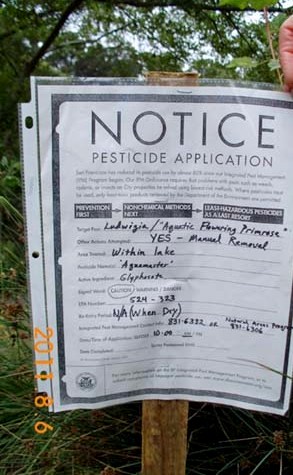
What our impression doesn’t include are the UCSF buildings on the hillside: The Aldea student housing, the Chancellor’s house, a parking lot, and some low buildings used as offices now.
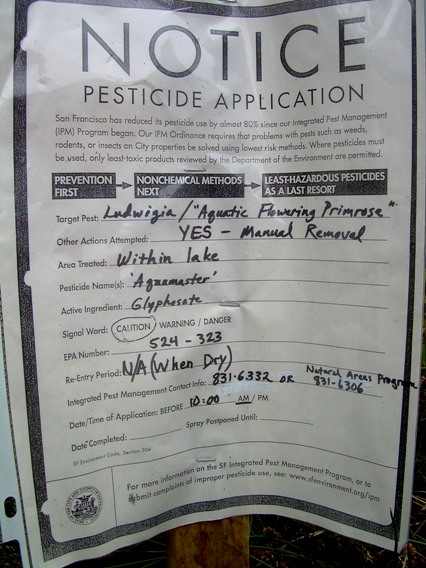
SOME TREES, MAYBE?

This picture doesn’t include any trees. If the trees in Mount Sutro Cloud Forest are thinned to a 30-60 foot spacing as planned, the entire mountain will have only 5% of the trees that are there now. Readers are invited to imagine this for themselves.

Posted in deforestation, eucalyptus, Mount Sutro Stewards, nativism, Natural areas Program, UCSF | Tagged , , , , | 1 Comment

Mount Sutro: Current Conditions in the Cloud Forest

Sunday evening, we were  in the forest. We started at Stanyan x 17th, going up the (Stanyan) “Kill-trees Trail.”

BEAUTIFUL — AND SLUSHY

It’s been very foggy in the last few weeks, and you can see the effect of the Cloud Forest. The tall trees precipitate moisture from the fog, and the forest patters with internal rain in many places. The trees look mysterious and ethereal.

The rain also saturates the trails, many of which are now deeply slushy. Some mountain-bikers have ridden through some of the bad spots, and further churned up the mud. On the route we took, the Kill-trees trail was quite dry, even dusty. Once we crossed Medical Center Way onto the North Ridge Trail, it grew wetter, and the middle of the route was like walking through a mire: muddy (and slippery). The Native Garden was quite dry, as it usually is, and anyway its paths are graveled.

We avoided the South Ridge Trail; we were there a couple of days ago, and some areas are very squishy. Instead, we took the paved Nike Rd down to the Aldea campus, and then the Fairy Gates Trail. The entrance to the Fairy Gates trail is a grassy patch in front of the Chancellor’s house, which leads into an amazing tree tunnel where trees completely cover the path, forming a dark archway. That was wet, but once we’d passed the Fairy Gates (a pair of standing rocks), the trail dried out, and by the time it connected to the Kill-Trees Trail to complete the loop, it was actually dusty again.

FLOWERS IN THE MIST

You can’t miss the nasturtiums, their brilliant orange color luminescent in the fog. They’re blooming all along the Fairy Gates trail, and just below Medical Center Way.

Here and there, some wild cherries have fallen near the trail. A few blackberries are apparent.

We also saw pale pink Passion Flowers, and some interesting fungi.

In the native garden, a few flowers are still blooming in the “meadow” sections old and new — some California poppies (we presume they’re the right ones) and some hairy gumplants.

MORE TREE FELLING?

Along the Stanyan Trail, we saw a number of trees splashed with orange paint and/or tied with pink tape. We suspect these are marked for destruction, adding to the toll of downed trees on the “Kill Trees Trail.”

Though we really like the trail giving forest access from Stanyan, we’ve been saddened by the huge gaps in the canopy, the trees felled, the decimation of the understory and the much-reduced bird-sounds.

Posted in Maps, Mt Sutro Cloud Forest | Tagged , , , | 1 Comment

Twin Peaks: Sunset and Evening Fog and Pesticides

It was an amazingly beautiful evening over San Francisco, and of course the views from Twin Peaks were spectacular. The fog flowed through and over the Golden Gate,  and only the towers poked through.  This is the stuff that turns Mount Sutro into a cloud forest, though its summit is only 1000 feet above sea level.

The sun started to set over the clouds, and Mount Sutro Forest stood in silhouette against the luminous orange sky.

And of course – since this is a Natural Area – there were pesticides.

The pesticide application was apparently completed on Aug 22. This is one of the few notices where we’ve actually seen a completion date filled in.

The target plants were cotoneaster, French broom, pea (?) and Cape Ivy.  The chemicals used were Imazapyr and glyphosate. Both pretty toxic, with a Tier II classification by San Francisco’s Department of the Environment. Glyphosate has been linked to birth defects, and Imazapyr’s breakdown product is neurotoxic.

JAKE SIGG AND THE “ANTI-CHEMICAL CRAZIES”

We’re against the use of Tier II and Tier I [Edited to correct Tier reference] pesticides in “Natural Areas.” We suspect that many of those who do support such use expect they’ll be used very infrequently. We had such a comment from one of our readers. And someone sent us this quote from Jake Sigg — whom many regard as the doyen of the native plant movement in San Francisco — about the difference between agricultural use of pesticides (which he opposes) and use in natural areas (which he supports, at least to the extent of calling those who oppose it “anti-chemical crazies“):

The primary difference is less between ag[ricultural] and natural (although there are differences here), but more in the frequency.  Roundup-ready crops are sprayed several times per crop, whereas a hypothetical wildland use of an herbicide would be, perhaps, once or twice in, say, a decade–then perhaps not again. 

We’re not sure which wildlands he writes of, but it’s not true of San Francisco. Twin Peaks is regularly hit with herbicides, as we’ve documented here; so is Glen Canyon; so is Pine Lake; so is McLaren Park. Glen Canyon has been sprayed, according to the records, ten times in a year — a far cry from “once or twice in a decade.” Twin Peaks… we lost count. We find pesticide notices there practically year round.

Ironically, Sigg made the “anti-chemical crazies” comment in the context of a report that glyphosate negatively impacts the soil, a finding that he applauded since it was a strike against agricultural uses of Roundup. (Has he seen the next big thing, “Enlist” by Dow? Dow has announced a GMO soybean that resists three different herbicides so that it can be sprayed with “a new Dow AgroSciences herbicide that combines glyphosate, glufosinate and 2,4-D.”)

We think it’s not a good idea to use toxic pesticides in Natural Areas.  San Francisco’s Natural Areas are close to inhabited places, are used for recreation by adults and children and dogs, and may be watershed areas. Twin Peaks and Mount Sutro — where the UCSF portion of the forest is pesticide-free — are high ground and watershed. Glen Canyon has a stream running through it.

And for what? At the most, they reduce patches of “unwanted” plants, i.e. non-native ones. The pesticides certainly don’t wipe out the target plants, or they wouldn’t be used year after year. It’s becoming like the War on Drugs,  this is the War on Non-native plants. Never-ending, with a tendency to escalate.

Meanwhile, there’s an increasing amount of chemicals building up in our “Natural Areas” and our watersheds. We do oppose this, as we oppose the planned use of toxic pesticides in Mount Sutro Forest.

So we’d like to own Sigg’s epithet [ETA: Though not exclusively, you can be one too!] and sign this post —

— The Anti-Chemical Crazies

Posted in Herbicides, nativism, Natural areas Program | Tagged , , , , , | 5 Comments

Destroying the Soundscape of Mount Sutro Forest

People have mentioned the sounds of and in the forest before, but it was only when we joined a Soundwalk in the forest that we became so conscious of it. Recently, someone pointed us to an article about Soundscape Ecology, about the work of Bryan Pijanowski of Purdue University. From that article:

“The terms we’ve developed allow us to think through ecosystem processes and the way humans impact that. The terms we’ve developed are:

  • Biophony – To be able to understand the biological voices that occur in the landscape
  • Geophony – [Sounds from the geophysical environment], such as wind and water
  • Anthrophony – The noise that humans make, which can be produced by a variety of instruments

If you put a microphone in the middle of an environment, you can record all those. You can record them for long periods of time. You can look at all aspects of the environment at any time of the day…”

Inside Sutro Forest, the tall trees and dense vegetation muffle the noise of the city. You don’t usually hear traffic sounds in most areas, even though it’s surrounded by streets and neighborhoods and on the Parnassus side, even a power-plant. Until even two years ago, the only “anthrophonic” sounds that pierced the forest were sirens — and, because it’s under some flight-paths from SFO airport, the occasional drone of airplanes. Now, in some areas, traffic sounds come in.

The main “biophonic” sound is — on a bright day — birdsong. Until the destruction of a lot of the understory, there was more of it than there is now, but it’s still audible.  On foggy days, there’s only the odd chirp. Where do we classify the rustle of birds in the undergrowth? There’s that, too.

Where do we classify the sounds of the trees themselves? There’s the soughing of the wind through the tops of the eucalyptus, the creaking and tapping of branches and twigs against each other. On really foggy days, there’s the patter of the forest’s internal rain on the leaves below; those days when it’s dry outside the forest and raining inside it where the trees precipitate the fog. That’s the cloud forest effect.

MANMADE SOUNDS UP, NATURAL SOUNDS DOWN

Coming soon to Sutro Forest?

This soundscape will be destroyed if the plan to cut down 5000 trees (and later, perhaps 35000 trees) goes through. This is what cutting the trees will do:

  • In the initial stages, the “chilling sound of chainsaws in the forest” as one neighbor described it — or maybe even the rumble and crash of the brontosaurus.
  • Then, a rise in the anthrophonic sounds of the city, already more audible than when we first set up this site two years ago… the rumble of traffic, the sounds of drums and music played loudly in the Golden Gate Park and in schools. There was a time when, inside the forest, there was no sight or sound of the city; it was a different world hidden in the heart of San Francisco. That’s less true today; in many places, gaps in the trees and removal of the blackberry has opened up the forest to views — and noise. Voices of people using the trail, barely heard now, will be more audible once the understory is torn out and the trees removed.
  • A reduction in biophonic sounds. The birds delighted in the understory, the dead tree snags, the ivy growing around the trunks of the trees, providing nesting and foraging space. As this habitat is reduced, so also are the birdsounds.
  • A change in the geophonic sounds. The wind will sound different, with 5,000 trees (or 35,000) fewer trees, with no understory to speak of. The tapping and creaking — who knows, once trees are spaced 30 feet apart?

Will it sound like a forest at all? Or just another hill in the middle of our city of hills?

Posted in Environment, Mount Sutro Stewards, Mt Sutro Cloud Forest, UCSF | Tagged , , , , , , | 1 Comment

Natural areas, Pine Lake and Pesticides… Again

From time to time, readers send us information about pesticides being used in “Natural Areas.” This time, it’s Pine Lake in Stern Grove… the same place where Imazapyr was used even before it was approved by the City. (It’s called Laguna Puerca on Google Maps.)

The pesticide is Aquamaster, i.e. glyphosate (similar to Roundup).

(Clicking on this picture will show a larger version.)

It came with this note (emphasis added):

What’s so natural about herbicides? Once again, herbicides are being sprayed in the Natural Areas, more specifically, Pine Lake. Don’t let your kids near the lake. Attached is the posted notice indicated spraying is “before 10AM” but I couldn’t see the date. When will it be safe for reentry? The sign says, “When dry.”  !!!!

Although most of us will agree that control of the aquatic primrose is desirable, mechanical removal, rather than herbicides, is the safer choice. The herbicide, Monsanto’s Aquamaster (i.e. aquatic version of Round-up) uses glyphosate as its active ingredients. Currently most studies support the safety of glyphosate. However, the controversy centers about the surfactants, i.e. chemicals added to glyphosate to make it adhere to the vegetation.

Here’s is a link to information about surfactants, in a risk assessment report for the Marin country Water District. The last pages of the chapter summarize the risks of surfactants, e.g. estrogenic effects on aquatic animals. For the most part, there is no scientific information or only sparse information on the risks.
http://www.marinwater.org/documents/Chap8_SurfDye9_2_08.pdf

Also, here is a link w/further information about herbicide use in SF Natural Areas Program.
http://milliontrees.wordpress.com/2011/04/29/concern-about-herbicide-use-legitimate-or-chemophobia/

As we’ve seen in other notices, someone forgot to fill in something — in this case, the date. As the writer points out, this makes it impossible to know when the pesticides were used and when it’s “safe” — presumably never, since it’s being applied “within lake” and will be safe “when dry.”

But still, it would be nice to know, from which date it will be unsafe?

(Also, we’d like to add that it’s not just the surfactants, though they’re definitely a concern. Recently surfacing research links glyphosate to birth defects.)

And… we hope Pine Lake isn’t Red-legged Frog habitat.

[ETA: We added more pictures from the same source. We’ve also been informed there are no Red-Legged Frogs. But there’s a kids’  daycamp adjacent to lake. (The picture shows the interpretive sign as well as the pesticide notice.)]

Posted in Herbicides, Herbicides: Roundup, Garlon, Natural areas Program | Tagged , | 3 Comments

Mount Sutro Forest, Deforested

This is the view of Mount Sutro Forest from Twin Peaks.

So we were thinking… how would Mount Sutro Open Space Reserve look if the anti-tree people get their way?

Maybe something like this? (It’s our best estimate, using a digitally altered image.)

Posted in deforestation, Mount Sutro Stewards, Mt Sutro Cloud Forest, Neighborhood impact | 3 Comments